Drive innovation and operational excellence across Canada’s
evolving mining sector.

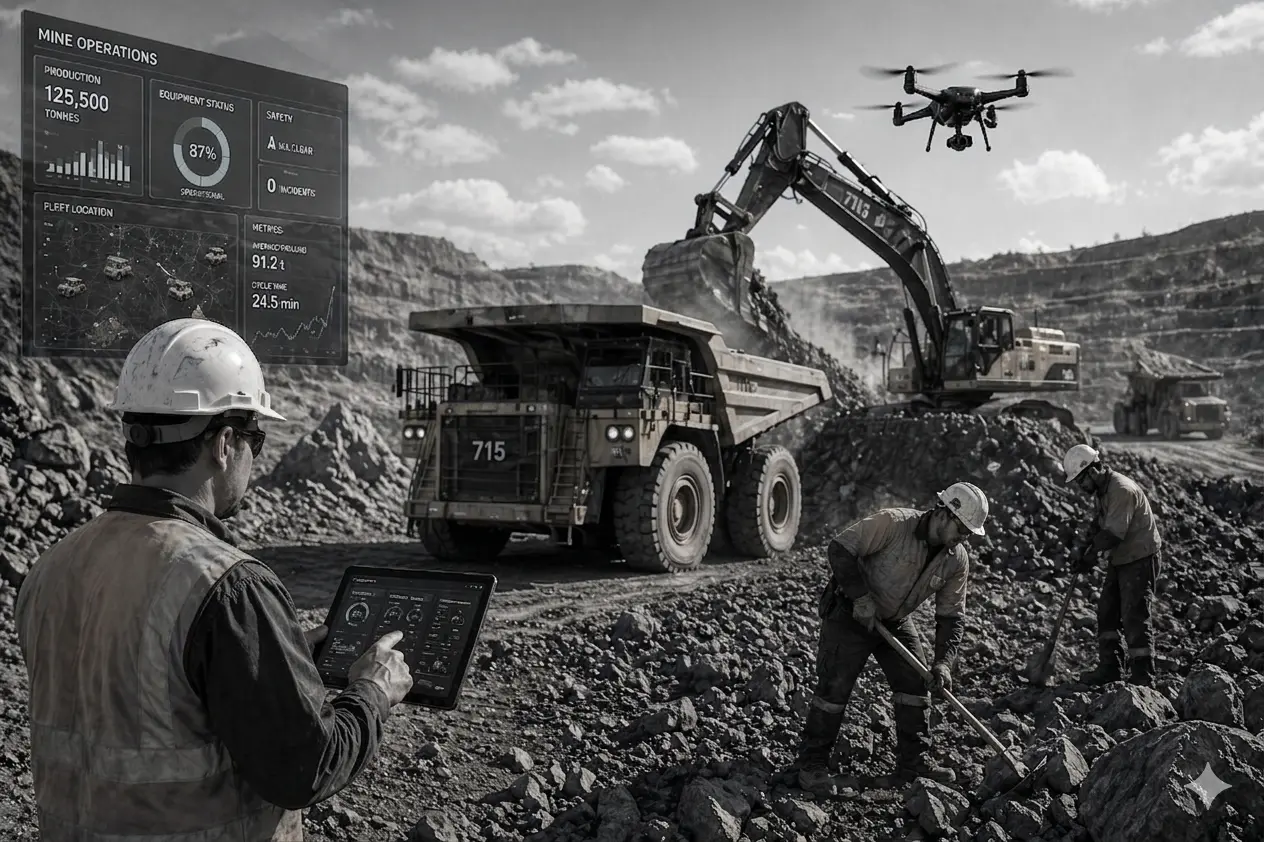
Leverage advanced technologies like artificial intelligence, IoT, and automation to drive smarter mining operations and predictive maintenance of critical assets. Gain real-time insights by integrating mine-site systems, fleet data, environmental sensors, and enterprise platforms across remote locations. Optimize extraction, processing, and logistics with intelligent solutions that minimize downtime, improve throughput, and ensure efficient resource utilization. Empower teams with intuitive digital tools for monitoring, safety control, and data-driven decision-making. Build resilient, secure, and scalable mining ecosystems that support compliance, protect operational data, and adapt to evolving industry and sustainability demands.
Improve mineral discovery accuracy and reduce exploration risks with AI-driven analytics and IoT-enabled remote sensing systems. Some of the key use cases include:
Some of the key use cases include:


Use AI to analyze geological and historical data to identify high-potential mineral zones.
Use IoT sensors and drones to collect real-time terrain and seismic data from remote locations.
Apply AI on satellite imagery to detect mineral patterns and anomalies.
Use connected drones for continuous site monitoring and mapping.
Enhance productivity and safety in open-pit mining operations using AI-powered insights and IoT-based monitoring systems.
Some of the key use cases include:
Use vision systems to monitor haul trucks, detect unsafe activities, and improve site safety.
Use IoT sensors to track vehicle performance, fuel usage, and machine health.
Use AI to optimize routes, reduce idle time, and increase operational efficiency.
Monitor equipment condition in real time to prevent breakdowns.
Improve worker safety and operational visibility in confined mining environments using AI and IoT technologies.
Some of the key use cases include:
Use computer vision to detect unsafe behavior and restricted zone access.
Use IoT wearables to track worker location and health metrics.
Use AI to identify potential hazards and predict risk scenarios.
Deploy sensors to monitor gas levels, oxygen, and underground conditions.
Optimize throughput and maintain quality standards in mineral processing plants with AI and IoT-driven systems.
Some of the key use cases include:
Use AI to optimize crushing, grinding, and refining operations.
Use sensors to track material flow and machine performance.
Apply vision systems to ensure consistent output quality and detect defects.
Monitor conveyor belts for misalignment and blockages.
Streamline mining logistics and transportation using AI-driven optimization and IoT-based tracking systems.
Some of the key use cases include:
Use AI to optimize transport routes and improve delivery efficiency.
Use IoT systems to track vehicle location and asset movement.
Analyze operational data to reduce idle time and fuel consumption.
Monitor fuel usage and vehicle performance in real time.
Enable equipment manufacturers to deliver smart, connected machinery with AI and IoT capabilities.
Some of the key use cases include:
Use AI to predict equipment failures and improve reliability.
Integrate IoT sensors within machinery for real-time monitoring.
Provide AI-driven insights into equipment usage and efficiency.
Enable remote diagnostics and monitoring for faster servicing.
Enhance product quality and precision with AI-powered analytics and computer vision systems focused on detecting micro-level defects, improving assembly accuracy, and ensuring reliability in electronics manufacturing environments.
Some of the key use cases include:
Use computer vision to ensure safety compliance and reduce violations.
Monitor environmental parameters using IoT sensors in real time.
Automate regulatory reporting using AI-driven data analysis.
Use sensors to monitor structural stability and prevent risks.
Enhance equipment efficiency and lifespan with AI-powered analytics and computer vision systems focused on predictive maintenance, fault detection, and real-time performance monitoring in mining operations.
Some of the key use cases include:
Use AI models to predict equipment failures and reduce downtime.
Monitor machine parameters like temperature, vibration, and pressure using IoT sensors.
Use computer vision to detect cracks, wear, and surface damage.
Track fuel consumption and optimize equipment usage with IoT data.
Improve mining logistics and operational efficiency with AI-powered analytics and computer vision systems focused on route optimization, fuel management, and real-time fleet tracking.
Some of the key use cases include:
Use AI to optimize routes and reduce travel time within mining sites.
Track vehicle location and movement using GPS-enabled IoT systems.
Analyze idle time and driver patterns to improve efficiency.
Monitor fuel usage and detect inefficiencies using IoT sensors.
Enhance precision and safety in drilling and blasting operations with AI-powered analytics and computer vision systems focused on pattern optimization, risk detection, and performance monitoring.
Some of the key use cases include:
Use AI to optimize drilling patterns for better fragmentation and output.
Monitor depth, pressure, and speed using IoT-enabled drill sensors.
Predict blast results using AI models to reduce waste and improve efficiency.
Track vibration levels and environmental impact using IoT sensors.
Improve material handling efficiency with AI-powered analytics and computer vision systems focused on failure detection, flow optimization, and real-time monitoring of conveyor operations.
Some of the key use cases include:
Use computer vision to detect belt tears, cracks, and surface damage.
Monitor motor performance and system health using IoT sensors.
Detect blockages and irregular material flow using AI models.
Track belt speed and load conditions to optimize performance.
"Enhance workforce safety and reduce on-site risks with AI-powered analytics and computer vision systems focused on real-time monitoring, behavior analysis, and compliance tracking in mining environments.
Some of the key use cases include:"
Use computer vision to ensure workers follow PPE protocols and safety standards.
Analyze worker movements to detect unsafe actions and prevent accidents.
Identify unauthorized access to hazardous zones using AI-based vision systems.
Use IoT wearables to monitor fatigue levels and worker health in real time.
"Ensure environmental compliance and sustainability with AI-powered analytics and IoT-enabled monitoring systems focused on real-time tracking of air, water, and land conditions in mining sites.
Some of the key use cases include:"
Track air quality and emissions using IoT sensors to meet regulatory standards.
Monitor water contamination levels in real time using connected sensors.
Use AI to analyze soil conditions and environmental impact.
Detect unusual environmental changes and trigger alerts for immediate action.
"Improve safety and risk management in tailings storage facilities with AI-powered analytics and IoT-driven monitoring systems focused on structural integrity, stability, and early risk detection.
Some of the key use cases include:"
Use IoT sensors to monitor dam stability and structural conditions.
Track water levels and internal pressure to prevent overflow risks.
Use computer vision to detect cracks and surface deformation.
Apply AI models to predict failures and generate early warnings.
"Drive sustainability and meet ESG goals with AI-powered analytics and IoT-enabled systems focused on tracking, analyzing, and optimizing carbon emissions across mining operations.
Some of the key use cases include:"
Track carbon emissions in real time using IoT-integrated systems.
Monitor energy usage across operations to identify inefficiencies.
Use AI to analyze emission patterns and calculate carbon footprint.
Generate actionable insights to reduce emissions and improve sustainability.