Respiratory diseases like asthma and COPD affect millions of Canadians. Managing them daily is a genuine challenge. Between clinic visits, patients may miss doses, track symptoms inaccurately, or experience gradual changes that go unnoticed. Doctors have limited visibility into what happens at home.
This gap in care continuity is a core challenge in respiratory disease management. Connected inhalers and IoT devices are emerging as practical support tools. They can help patients, caregivers, and healthcare providers track medication use and monitor patterns more effectively. These tools do not replace qualified healthcare professionals, but they can improve visibility and support better-informed clinical decisions.
What Are Connected Inhalers?
Connected inhalers are standard inhalers, or inhaler attachments, fitted with small electronic sensors. These sensors record each device use automatically, capturing data such as time, date, and usage frequency. That data is then transmitted to a mobile app or healthcare dashboard via Bluetooth or wireless connectivity.
Unlike traditional inhalers, connected inhalers provide measurable adherence data. Patients receive reminders, and healthcare providers can review usage patterns over time. Some systems also assess whether inhaler technique is correct, which can support better medication delivery. A connected inhaler does more than deliver medication. It helps track usage and supports ongoing reporting between patients and their care teams.
Role of IoT Devices in Respiratory Disease Management
IoT devices in respiratory disease management extend monitoring beyond the inhaler alone. IoT connects multiple devices, mobile apps, cloud platforms, and provider dashboards into an integrated workflow.
Connected medical devices for respiratory health include pulse oximeters, peak flow meters, air quality sensors, and wearable health monitors. A pulse oximeter tracks blood oxygen levels. An air quality sensor may help identify environmental triggers. A peak flow meter supports at-home lung function monitoring.
When these devices work together on a shared platform, they can support remote care and provide care teams with a more complete view of patient health between visits.
Common Problems in Respiratory Disease Management
Missed or inconsistent inhaler use is very common. Many patients skip preventive doses when feeling well. Manual symptom tracking is unreliable, and patients often cannot accurately recall their daily condition by the time of their next appointment. Without reliable data, providers have limited visibility between visits.
Sudden symptom worsening can occur without obvious early signs. Caregivers looking after children or elderly patients with asthma or COPD often find it difficult to notice gradual changes in real time. These challenges highlight the need for digital respiratory care solutions that can support more continuous monitoring and improve care team communication.
How Connected Inhalers Help Asthma and COPD Patients
Smart inhalers for asthma can support more consistent medication use by sending reminders and recording each dose automatically. Patients gain better awareness of their own patterns, and doctors can review actual adherence data rather than relying on recall alone.
Smart inhalers for COPD may help patients and caregivers monitor rescue inhaler use over time. A gradual increase in rescue inhaler frequency can be a meaningful signal, potentially prompting a clinical review before a condition progresses further.
Other practical benefits include caregiver alerts for missed doses, simpler data sharing with doctors, and more productive clinical conversations based on real usage data. Connected inhalers do not guarantee specific outcomes, but they can support better daily management of both asthma and COPD.
Remote Patient Monitoring for Respiratory Care
Remote patient monitoring for respiratory care can help care teams stay connected to patients between clinic visits. The workflow is straightforward.
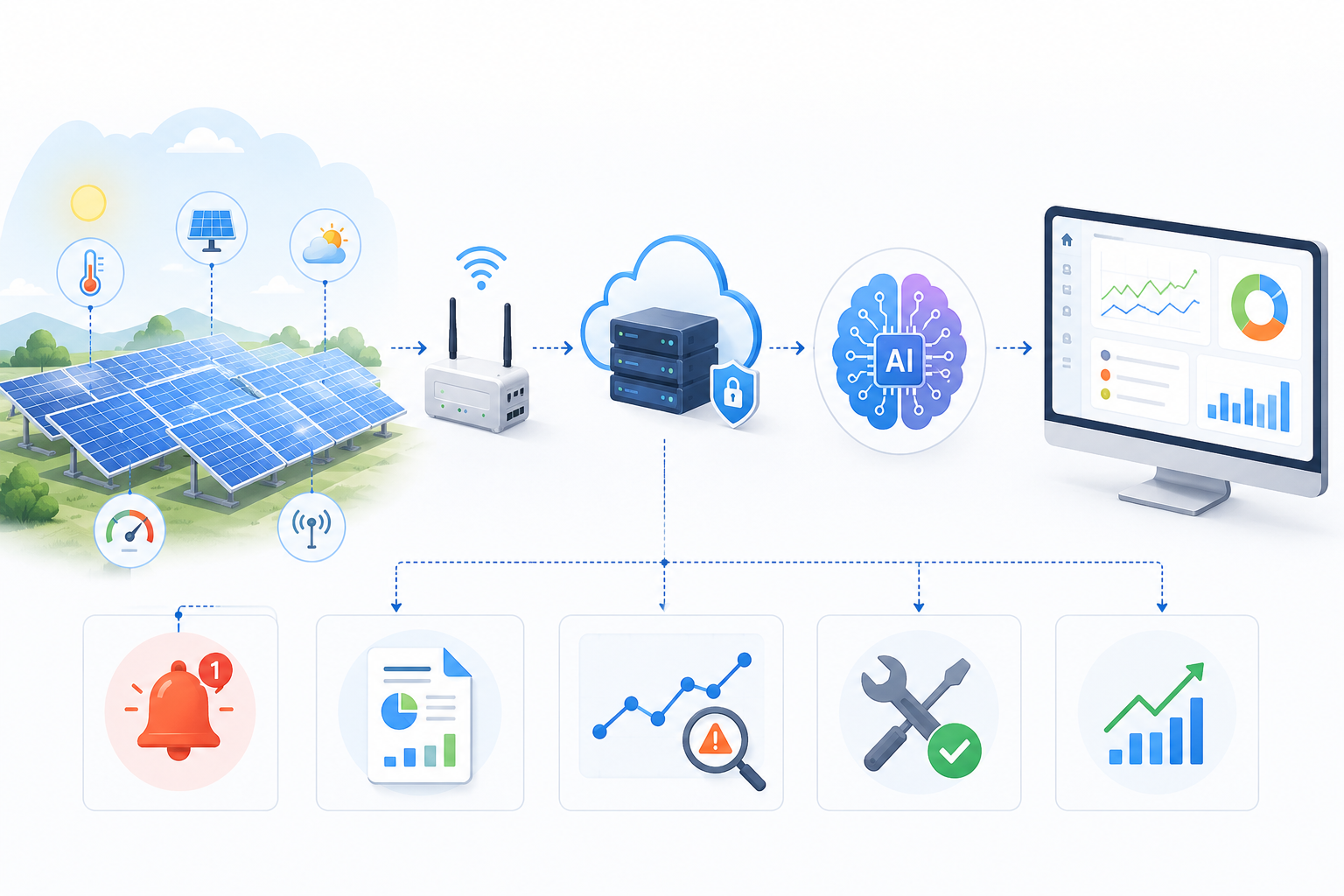
A patient uses a connected inhaler or IoT device at home. The device records data automatically and syncs it to a mobile app. The app sends the data to a secure cloud platform. The care team reviews trends and alerts on a provider dashboard. If unusual patterns are detected, the system may generate a notification, and the care team decides whether follow-up is needed.
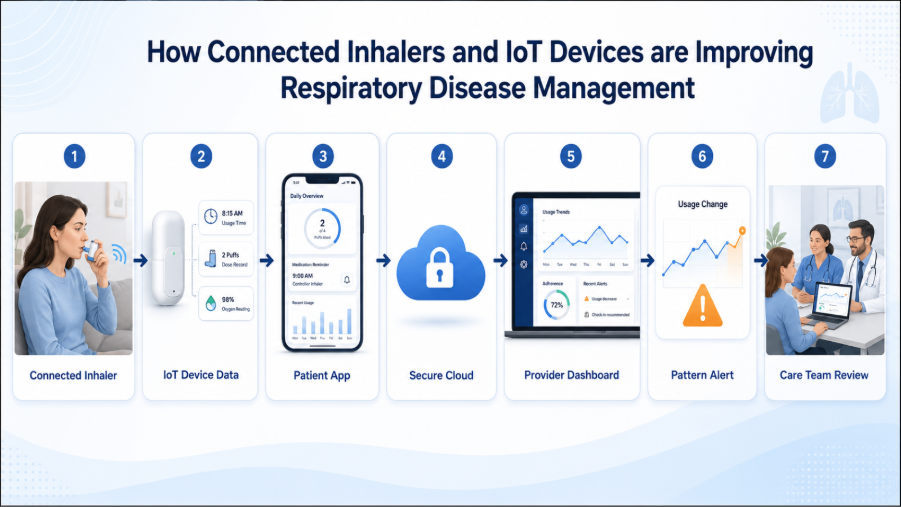
Figure: Connected inhaler and IoT-based respiratory monitoring workflow, from patient device use to care team review.
This process supports clinical decisions. It does not automate them. Healthcare professionals remain responsible for reviewing data, applying their clinical judgment, and determining appropriate next steps.
Role of Mobile Apps and Cloud Dashboards
Mobile apps form the patient-facing layer of any connected respiratory care system. A well-designed smart inhaler app may include medication reminders, symptom logging, trigger tracking, device pairing, health trend charts, secure report sharing, and caregiver access. Easy usability matters greatly, particularly for elderly or less tech-familiar patients.
Smart inhaler app development should treat accessibility as a core design requirement, not an afterthought.
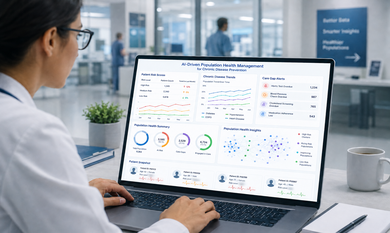
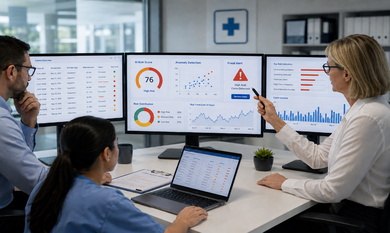
Cloud dashboards serve the provider side. They allow doctors to view usage reports, track adherence trends, and monitor alerts in one place. For clinics and hospitals managing many respiratory patients, dashboards can support organized care coordination and may help identify patients who need timely attention.
How AI Can Support Respiratory Health Insights
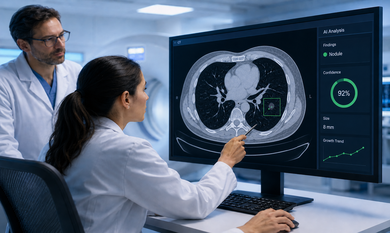
AI and IoT in respiratory disease management represent a growing capability in digital health. AI can analyze inhaler usage patterns, detect unusual changes over time, support patient risk scoring, and help care teams prioritize follow-ups.
For example, AI may help identify a gradual rise in rescue inhaler use over several weeks. This type of pattern analysis across large patient populations is difficult to perform manually and may prompt a clinical review at an earlier stage.
AI-supported insights should assist healthcare professionals, not substitute for clinical judgment. Any alert or risk signal must be reviewed and acted upon by a qualified care team member. Technology supports the process. The clinician makes the decision.
Benefits for Patients, Providers, and Healthcare Businesses
For patients: Connected devices can support better medication tracking, provide helpful reminders, improve awareness of personal usage patterns, and simplify sharing health data with doctors.
For doctors and clinics: These tools can improve visibility between appointments, provide accurate patient usage data, support timely follow-ups, and simplify remote monitoring for larger patient groups.
For healthcare businesses: Building digital respiratory care solutions requires expertise across connected inhaler apps, IoT dashboards, cloud platforms, and AI-supported analytics. Companies that invest in professional healthcare software development services can build scalable platforms that serve clinics, hospitals, and respiratory care providers across Canada. As demand for remote monitoring grows, the business case for connected respiratory platforms continues to strengthen.
Challenges, Privacy, and Ethical Considerations
Connected respiratory care platforms come with important responsibilities. Patient data privacy is a primary concern. Platforms must apply strong encryption, strict access controls, and comply with applicable Canadian healthcare data regulations. Clear patient consent is required before any data is collected or shared.
Canada Health Infoway also highlights the importance of privacy and security requirements for digital health solutions, especially when platforms handle patient information and clinical workflows. Read more
Device accuracy matters. Inaccurate data can lead to poor clinical decisions. Reliable connectivity is necessary for consistent data syncing. Platforms should be designed for all users, including elderly patients with limited technology experience.
Over-reliance on technology is a genuine risk. Connected devices should support care, not replace clinical oversight. Responsible data use, ethical AI design, and consistent doctor supervision are foundational requirements for any trustworthy healthcare technology platform.
Technology Stack for a Connected Respiratory Care Platform
Building an IoT-based respiratory care platform requires a layered architecture. The device layer includes connected inhaler sensors, pulse oximeters, peak flow meters, air quality sensors, and wearables. The mobile app layer handles reminders, symptom logs, device pairing, caregiver access, and health trend charts. The cloud layer manages secure storage, APIs, data processing, and push notifications. The analytics layer covers usage pattern analysis, adherence tracking, and risk trend detection. The provider dashboard supports patient lists, usage reports, alerts, trend charts, and follow-up management.
Each layer must be designed with security, scalability, and regulatory compliance at its core.
Realistic Use Case Example
Consider a COPD patient using a connected inhaler and pulse oximeter at home. The mobile app sends daily reminders and logs every inhaler use automatically. Over three weeks, the platform detects a gradual rise in rescue inhaler frequency. The pattern appears on the provider dashboard. The care team reviews the data and schedules a check-in call to assess the patient's current condition.
The platform does not diagnose or treat the patient. It helps the care team notice a pattern that might otherwise go undetected until a scheduled appointment.
Future of Connected Inhalers and IoT in Respiratory Care
As telehealth and remote monitoring adoption grows across Canada, connected inhalers and IoT devices may become standard components of respiratory disease management. Future developments may include more personalized care support, deeper telehealth integration, and more refined AI-supported insights.
Adoption will depend on patient acceptance, regulatory clarity, and demonstrated clinical value. Continuous, connected care models are becoming increasingly relevant across the Canadian healthcare landscape.
Conclusion
Connected inhalers help track inhaler usage. IoT devices support remote respiratory monitoring. Mobile apps support patient routines. Cloud dashboards help providers view usage trends. AI can support pattern detection. Together, these tools can improve visibility, strengthen communication between patients and care teams, and support more consistent management of asthma and COPD.
These tools support respiratory disease management. They do not replace qualified healthcare professionals, and clinical oversight remains essential.
For healthcare businesses ready to build in this space, working with a team that offers IoT development services in Canada can make a meaningful difference. Theta Technolabs brings expertise in Web, Mobile, Cloud, IoT, and AI-based healthcare solutions, helping businesses build compliant, scalable, and effective digital health platforms.
Ready to Build Your Connected Respiratory Care Platform?
Theta Technolabs works with healthcare startups, clinics, digital health companies, and medical device companies to develop connected respiratory care solutions. Whether you need connected inhaler app development, an IoT healthcare platform, a remote patient monitoring dashboard, cloud-based healthcare software, or AI-supported analytics, our team brings expertise across Web, Mobile, Cloud, IoT, and AI.
Get in touch: sales@thetatechnolabs.com
Meta Description - Read how connected inhalers and IoT healthcare devices support medication tracking, remote monitoring, and better patient care.