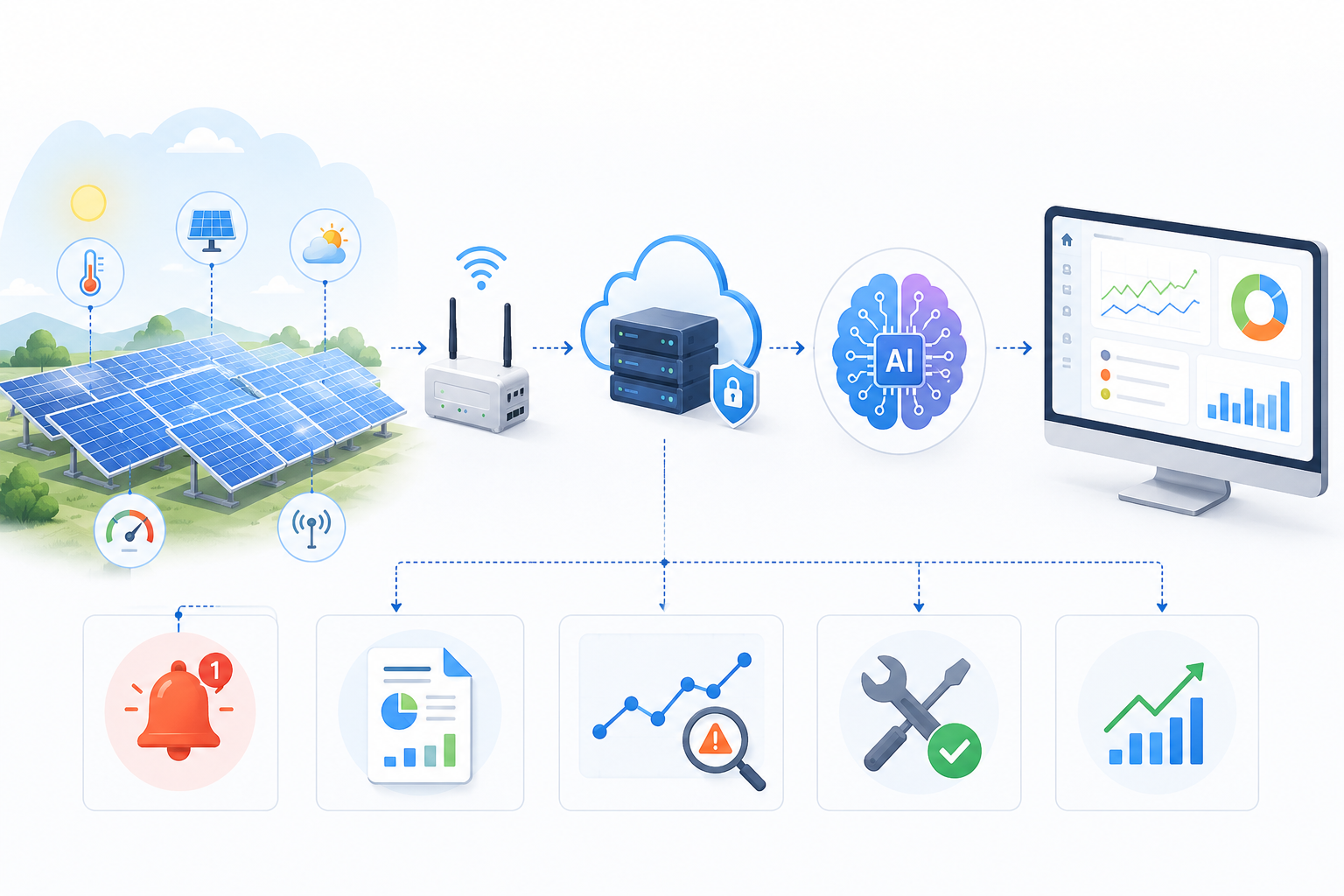


Financial companies are using data for more than reporting past performance. Today, fintech platforms, banks, lending companies, investment firms, and insurance providers want systems that can predict risks, recommend actions, and support faster decisions. This is where predictive analytics and prescriptive analytics in finance become important.
Both approaches help financial businesses make better decisions, but they are not the same. Predictive analytics helps answer, “What is likely to happen?” Prescriptive analytics helps answer, “What should we do next?” For Canadian fintech companies, understanding this difference is useful when building smarter financial analytics solutions with machine learning and deep learning.
What Is Predictive Analytics in Finance?
Predictive analytics in finance uses historical data, statistical models, machine learning, and pattern recognition to forecast future outcomes. It studies past financial behavior and identifies trends that can help businesses estimate what may happen next.
For example, a lending platform can use predictive analytics to estimate whether a borrower is likely to repay a loan on time. A payment company can use it to identify transactions that may be fraudulent. An investment platform can use predictive models to forecast market behavior or customer investment preferences.
In simple terms, predictive analytics gives finance teams early signals. It does not make the final decision, but it helps decision-makers understand possible risks and opportunities before they happen.
Common examples include:
- Fraud detection analytics
- Credit risk modeling
- Revenue forecasting
- Customer churn prediction
- Loan default prediction
- Market trend forecasting
This is why machine learning in fintech has become so valuable. With the right data and model training, financial companies can move from reactive decision-making to proactive planning.
What Is Prescriptive Analytics in Finance?
Prescriptive analytics in finance goes one step further. Instead of only predicting what may happen, it recommends the best possible action based on the prediction.
For example, predictive analytics may show that a borrower has a high chance of default. Prescriptive analytics can recommend whether to approve the loan, reject it, adjust the credit limit, increase verification, or send the case for manual review.
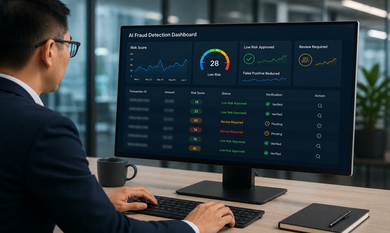
Similarly, in fraud management, predictive analytics may flag a suspicious transaction. Prescriptive analytics can suggest the next action, such as blocking the transaction, requesting two-factor authentication, or allowing it with additional monitoring.
Prescriptive analytics is closely connected with AI-powered financial decision-making because it combines data, business rules, machine learning models, optimization techniques, and decision engines. It helps finance teams take practical action instead of only reviewing insights.
Predictive Analytics vs Prescriptive Analytics: Key Differences
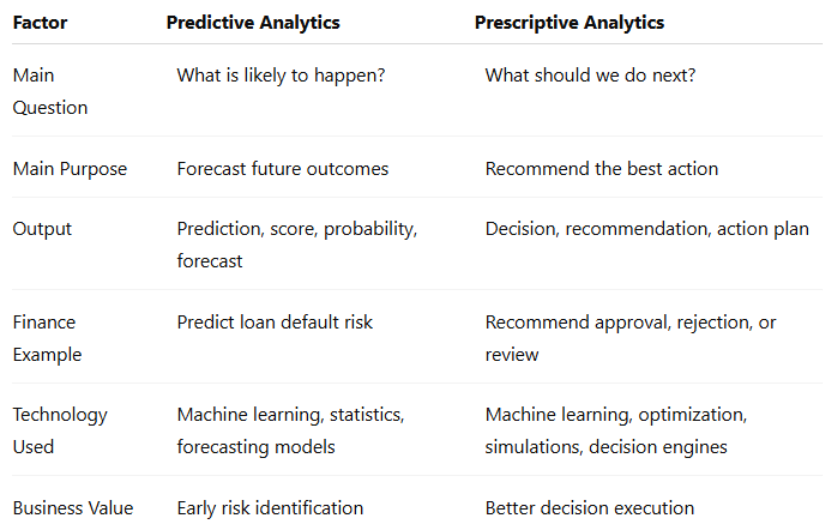
The main difference is that predictive analytics provides insight, while prescriptive analytics provides direction. In finance, both are useful because predictions without action can limit business impact, and actions without accurate predictions can increase risk.
How Both Analytics Types Work Together in Fintech
Predictive and prescriptive analytics are most powerful when used together. A fintech company may first use predictive analytics to identify customer behavior, fraud risk, credit risk, or market trends. Then, prescriptive analytics can recommend the best response based on that prediction.
For example, a digital lending platform can predict which applicants are likely to default. After that, a prescriptive model can suggest whether to offer a smaller loan amount, request more documents, increase the interest rate, or decline the application.
This combined approach helps fintech businesses improve decision speed, reduce manual review, and deliver more personalized financial services.
Why Canadian Fintech Companies Need These Analytics
Canada’s fintech market is becoming more competitive, and financial businesses need smarter systems to manage risk, improve customer experience, and make faster data-backed decisions. Predictive and prescriptive analytics can support this by helping companies understand customer needs, detect financial risks, and optimize business actions.
For companies planning to build advanced analytics systems, working with a partner offering machine learning development services in Canada can help create models that are accurate, scalable, and aligned with business goals.
Fintech companies can also benefit from broader AI development services in Canada when they want to integrate analytics into web platforms, mobile apps, dashboards, customer portals, or automated decision workflows.
For businesses looking for industry-specific digital solutions, a fintech software development company in Canada can help connect financial analytics with real fintech use cases such as lending, payments, wealth management, compliance, and risk monitoring.
Role of Machine Learning and Deep Learning
Machine learning and deep learning make predictive and prescriptive analytics more powerful. Machine learning models can identify complex financial patterns that are difficult to find manually. Deep learning can support advanced use cases such as anomaly detection, transaction behavior analysis, document intelligence, and large-scale risk modeling.
With Machine Learning & Deep Learning Development Services in Canada, fintech companies can build custom solutions for fraud detection, credit risk modeling, customer segmentation, investment recommendations, and financial forecasting. These solutions can be integrated into existing finance systems to support faster and more reliable decision-making.
Conclusion
Predictive analytics and prescriptive analytics in finance both play an important role in modern fintech decision-making. Predictive analytics helps financial companies understand what may happen next, while prescriptive analytics helps them decide what action to take.
For Canadian fintech businesses, using both approaches can improve fraud detection, credit decisions, customer experience, and financial planning. With the right machine learning and deep learning strategy, financial companies can move from simple reporting to intelligent, action-ready analytics.
Theta Technolabs helps businesses build AI-powered finance solutions with expertise in Web, Mobile, and Cloud development. From predictive models to prescriptive decision systems, the right technology partner can help fintech companies create smarter, secure, and scalable financial platforms.
Build Smarter Financial Analytics Solutions with Theta Technolabs
Looking to develop AI-powered analytics for your fintech business? Theta Technolabs offers Machine Learning & Deep Learning Development Services in Canada to help financial companies build predictive models, prescriptive analytics engines, and intelligent decision-making platforms.
Our team can support your Web, Mobile, and Cloud development needs with custom fintech solutions designed for forecasting, risk management, fraud detection, and automation.
Contact us at sales@thetatechnolabs.com to discuss your fintech analytics project.