

Medical billing fraud often appears through repeated claim patterns, unusual billing codes, inflated charges, or provider activity that does not match normal billing behaviour.
For Canadian healthcare organizations and insurance providers, reviewing every claim manually is difficult because the volume of billing data keeps growing. Audit teams need a smarter way to identify which claims need attention first.
This is where machine learning for medical billing fraud detection can help. By analysing claim history, provider behaviour, patient activity, and billing patterns, machine learning models can flag unusual claims and assign risk scores for review. It does not replace human auditors, but it helps them focus faster on cases that may need deeper investigation.
What Is Medical Billing Fraud?
Medical billing fraud occurs when a provider, patient, or third party submits false or misleading information to receive payment that was not earned. In Canada, this affects public health programs, private insurers, and employer-sponsored health benefit plans.
Common examples include submitting claims for services never delivered, billing at a higher rate than the service actually provided, and submitting the same claim more than once.
This blog focuses on technology-based detection support. Confirming fraud and taking legal action requires qualified investigators and compliance professionals.
Common Medical Billing Fraud Patterns in Canada
Understanding what fraud patterns look like helps healthcare and insurance teams build more effective detection systems. Common types include:
- Phantom billing: Submitting claims for services, tests, or procedures never provided to the patient.
- Upcoding: Charging for a higher-value service than what was actually delivered.
- Duplicate claims: Submitting the same claim more than once, sometimes with minor changes in service dates or billing codes.
- Unbundling: Separating services that should be billed as a single combined code to increase the total claim amount.
- False provider or patient details: Using incorrect or fabricated identities in claim submissions.
- Excessive billing frequency: Billing for the same service at an unreasonably high rate for a single patient.
- Provider-patient collusion: Coordinated submissions between a provider and patient to submit fraudulent claims.
Why Manual Billing Fraud Detection Is Difficult
Billing teams and auditors play a critical role in detecting fraud. However, manual review faces real limitations at scale.
Canadian insurers and healthcare organizations process enormous claim volumes daily. Each claim contains multiple data points including billing codes, service dates, provider information, and treatment notes. Reviewing all of this manually is time-consuming and prone to oversight.
Fraudulent billing patterns also evolve over time. Manual review may catch repeated errors but often misses subtle trends that only emerge when comparing behaviour across thousands of providers. Audit teams may also lack the tools to perform cross-provider comparisons efficiently.
Manual review remains essential. Machine learning supports it by helping teams identify which claims deserve the closest attention first.
How Machine Learning Helps Detect Billing Fraud
Machine learning works by learning from historical data. Here is how it supports fraud detection in practical terms.
The model studies past claims to understand what normal billing behaviour looks like for different providers, specialties, and service types. It then compares incoming claims against those established patterns.
AI in medical billing fraud detection focuses on identifying statistical outliers. A provider billing significantly more high-cost procedures than similar peers may be flagged. A patient receiving the same treatment from multiple providers in a short period may also trigger an alert.
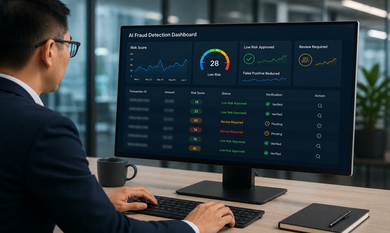
Medical claim fraud detection models assign risk scores to claims based on multiple factors. High-risk claims appear first in audit queues, allowing teams to review suspicious cases more efficiently.
Healthcare claims anomaly detection works across large datasets simultaneously. It can compare billing behaviour across thousands of providers, a task that would take audit teams weeks to complete manually.
Fraud detection in healthcare systems can improve over time when audit feedback is properly reviewed, validated, and used to update the model. This helps the system learn from confirmed outcomes and reduce repeated false alerts.
The healthcare sector in Canada benefits from this approach because it addresses high claim volume and increasing fraud complexity without requiring a proportional increase in audit staff.
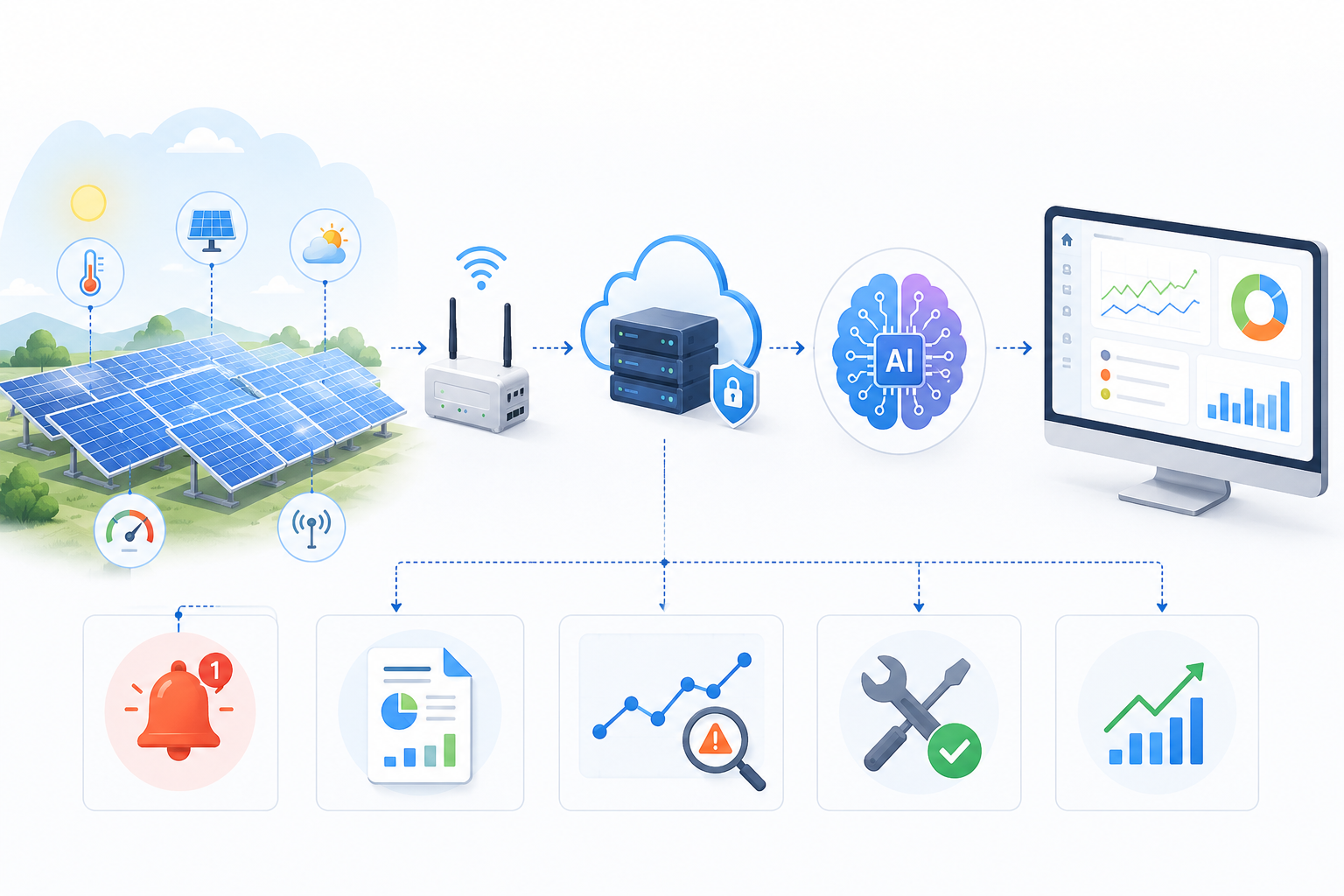
Figure: Machine learning workflow for medical billing fraud detection
Machine Learning Techniques Used in Fraud Detection
Several techniques work together in a fraud detection system:
- Anomaly detection identifies claims that fall outside normal billing ranges.
- Classification models are trained on historical fraud cases to evaluate risk in new claims.
- Clustering groups providers with similar billing profiles so outliers stand out more clearly.
- Natural language processing compares treatment notes with billing codes to flag inconsistencies.
- Predictive analytics helps compliance teams act earlier by identifying patterns trending toward high-risk activity.
- Graph analytics identifies suspicious relationships between providers and patients that may indicate coordinated fraud.
Key Features of a Medical Billing Fraud Detection System
When evaluating healthcare fraud detection software, decision-makers should look for these capabilities:
- Claim risk scoring to prioritize audit reviews
- Automated alerts for duplicate submissions
- Provider billing anomaly detection to identify outliers within peer groups
- Patient claim history analysis to detect unusual treatment patterns
- Billing code anomaly detection to flag inconsistent code combinations
- A real-time alert dashboard for compliance and audit teams
- Audit workflow management to track flagged cases from identification to resolution
- Combined rule-based and ML-based detection for layered coverage
- Integration with billing platforms, EHR systems, EMR tools, and insurance claim systems
- Compliance-ready reporting
- Human review and approval workflows
An AI-powered billing audit system supports teams without removing human oversight. Every flagged case should still be reviewed by a qualified professional before any action is taken.
Realistic Implementation Example
Consider a health insurer processing thousands of claims daily. A machine learning model compares each claim against historical provider averages, service codes, patient claim frequency, and regional billing norms.
One provider begins submitting a noticeably higher proportion of high-value procedure codes compared to peers in the same specialty. The system flags this provider and assigns a high risk score to their recent submissions.
The audit team receives an alert and reviews the flagged claims. The model does not conclude fraud has occurred. It identifies a pattern that requires closer human review, helping the team investigate efficiently without manually searching through thousands of records. In a real implementation, this kind of workflow can help audit teams reduce time spent on low-risk claims and focus more attention on claims that show unusual billing behaviour.
Business Benefits for Healthcare and Insurance Teams
When implemented with clean data and human review, machine learning tools can support practical improvements for healthcare organizations and insurers:
- Faster identification of suspicious claims within large volumes
- Reduced manual audit workload through better case prioritization
- Greater visibility into provider billing behaviour across regions
- Earlier detection of billing irregularities before claim review costs increase
- More scalable fraud monitoring as claim volume grows
- Better decision support for compliance teams
Results will vary depending on data quality, implementation approach, and existing workflows. Machine learning can help reduce review time and may improve audit efficiency, but outcomes depend on how well the system is implemented and maintained.
What Data Is Needed for Better Fraud Detection?
A fraud detection model performs better when it has access to relevant, high-quality data. Useful inputs include claim history, billing codes, provider details, patient claim frequency, service dates, claim amounts, treatment notes, audit outcomes, payment status, and historical fraud indicators.
Data quality and access controls matter significantly. All data used in fraud detection should be handled securely and in compliance with applicable Canadian privacy regulations, with access limited to authorized personnel only.
Conclusion
Medical billing fraud detection requires both technology and human expertise working together. Machine learning helps healthcare organizations and insurers work through high claim volumes more efficiently by identifying suspicious billing patterns, anomalies, duplicate submissions, and unusual provider behaviour that is difficult to catch through manual review alone.
Theta Technolabs supports healthcare and insurance businesses with custom AI, web, mobile, and cloud solutions. If your organization is looking to improve how it monitors billing activity, our machine learning services can support the design and development of a fraud detection system tailored to your data environment, workflow, audit process, and compliance requirements.
Work With Theta Technolabs
If you are planning to build a medical billing fraud detection system, claim monitoring platform, AI-powered billing audit system, or healthcare analytics solution, Theta Technolabs can help you design and develop secure, scalable, and custom solutions.
Theta Technolabs brings expertise across:
- AI development
- Web application development
- Mobile application development
- Cloud consulting and implementation
- Healthcare software solutions
Reach out to our team at sales@thetatechnolabs.com to discuss your project requirements.
Frequently Asked Questions
1. How can machine learning detect medical billing fraud?
Machine learning studies historical billing data and learns what normal claim patterns look like. It then compares incoming claims against those patterns and assigns risk scores to submissions that appear unusual, helping audit teams prioritize reviews.
2. Can AI detect duplicate medical claims?
Yes. AI models can compare claims across large datasets and flag submissions where the same service appears billed more than once, even when details are slightly varied. Human review is still required to confirm any finding.
3. What is provider billing anomaly detection?
It is the process of comparing a provider's billing behaviour against similar providers in the same specialty or region. When patterns fall significantly outside the expected range, claims are flagged for audit team review.
4. Does machine learning replace healthcare auditors?
No. Machine learning supports auditors by surfacing suspicious cases more efficiently. All flagged cases still require human review and professional judgment before any conclusion or action is taken.
5. What features should healthcare fraud detection software include?
Key features include claim risk scoring, duplicate claim alerts, provider behaviour analysis, patient history review, billing code anomaly detection, real-time dashboards, audit workflows, and integration with existing billing and claims systems.