

When launching a digital alternative lending platform or a modern neobanking app in Canada, non-technical founders frequently fall into a predictable visual trap. They spend months iterating on Figma prototypes, polishing interface styling, and refining frontend navigation trees. But in fintech, a great UI is just the bare minimum. The real value—and the security that keeps you from getting shut down happens entirely under the hood.
Building a high-performing financial product requires moving your focus away from the superficial aesthetic layers and onto your core data orchestration middleware. Real traction depends on how cleanly your system connects with third-party networks to manage institutional risk, automate user background screening, and handle capital flow securely. To get this infrastructure right, you need a clear plan for fintech mvp kyc integration, ensuring your software handles sensitive financial data safely from your very first cohort of beta users.
For early-stage operators launching in competitive tech hubs like Toronto, Vancouver, or Montreal, executing this backend strategy correctly dictates your entire initial engineering timeline. Choosing the wrong infrastructure setup early can create critical technical blocks that stall your user growth completely. Partnering with engineers who understand localized requirements is vital for establishing an optimal framework for fintech app development canada, allowing your startup to navigate early scale-up phases smoothly without encountering crippling technical bottlenecks.
To build a resilient platform, developers must look past basic data structures and establish a robust framework that supports continuous background data processing. When kicking off an enterprise-grade financial app, strategic mvp development means looking past a polished frontend dashboard and mapping out your underlying data infrastructure early to maintain stable processing loops as transactional volumes grow.
The Pre-MVP Trap: Why a Misaligned API Stack Drains Capital Faster Than Bad Code
Fixing a bad button or a broken layout takes a few hours. But a messy backend architecture can stall your product roadmap for months and completely exhaust your early financial resources. The most severe technical mistake an early-stage startup can make is getting locked into a rigid, non-scalable fintech api architecture before verifying early market traction.
Most legacy KYC vendors hide their pricing behind endless enterprise sales calls and gate-keep their best features and production APIs behind multi-year contracts that demand prohibitive annual minimum financial commitments. For a bootstrapping pre-MVP startup with a lean operating budget, spending limited capital on heavy enterprise platform infrastructure
before acquiring an established user base can severely deplete your operational runway. The structural contrast between these two approaches highlights the difference in capital efficiency:
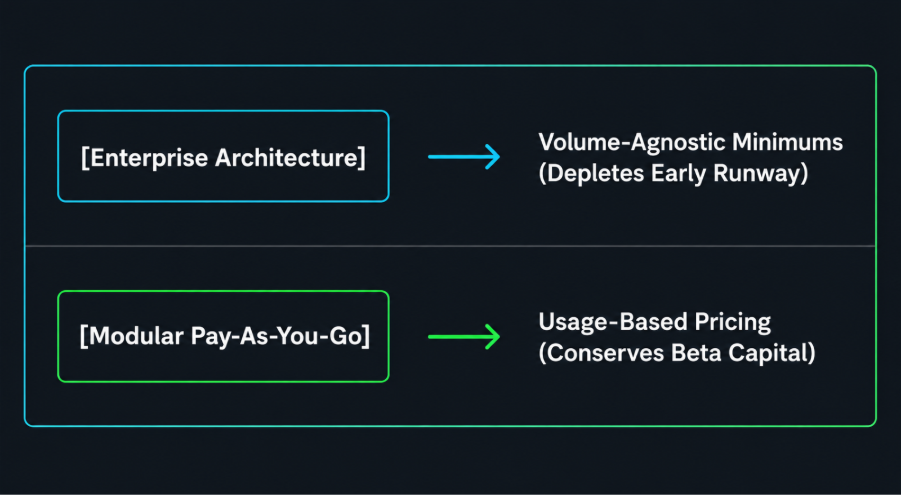
Figure 1: Visualizing the strategic runway impact of locked-in enterprise pricing versus an agile, usage-based infrastructure.
Beyond these contractual risks, a lack of clear architectural planning causes massive engineering inefficiencies. If your developers build highly rigid, direct connections to a single compliance provider without utilizing a flexible abstraction middleware layer, you create an expensive technical dependency. If that vendor alters their API payloads, increases their transaction pricing, or suffers a prolonged system outage, your team is forced to rewrite your core onboarding logic from scratch.
Evaluating transactional costs and rate limits from the start is an essential part of a thorough product discovery process that prevents crippling technical debt post-launch. By mapping out how external services communicate with your core database before writing code, you can build an adaptive, modular system that can easily exchange underlying vendors as your transaction volumes grow.
Navigating the Canadian Regulatory Landscape: FINTRAC Compliance for Lending and Neobanking
Running a lending platform or a neobank in Canada means playing by some of the toughest financial rules in the world. The Financial Transactions and Reports Analysis Centre of Canada (FINTRAC) heavily polices alternative financial networks under the Proceeds of Crime (Money Laundering) and Terrorist Financing Act (PCMLTFA). If your platform fails an initial regulatory assessment due to weak background screening protocols, your business can face immediate operational halts or severe financial penalties.
A common structural mistake is assuming that forcing a user to upload a static photo of their driver's license constitutes a legally valid digital onboarding workflow. Under modern financial regulations, simple visual checks of documents are wholly insufficient for remote verification. To launch a legally compliant product, your technical architecture must implement a programmatic framework that aligns with strict canadian fintech regulatory compliance parameters.
To satisfy federal anti-money laundering standards for remote user onboarding without relying on physical, in-person document verification, your system must execute the rigid Dual-Process Method. This operational framework requires your backend to cross-reference a customer's personal data points across multiple independent, highly trusted corporate or public record networks in real time.
According to the official FINTRAC guidance on identity verification methods, your platform's backend data layers must confirm specific user attributes by matching them against separate, authoritative data streams:
- Credit File Verification: Your application must programmatically connect to a major national credit bureau API (such as Equifax Canada or TransUnion) to verify that the user's name, current residential address, and date of birth match an active credit file that has an established history.
- Independent Database Matching: Your platform must simultaneously query a separate, independent database repository—such as a major Canadian utility network, a provincial government registry, or a schedule I banking data feed—to verify the user's name and confirm either their address or date of birth.
- Sanction and PEP Screening: The system must instantly parse global database records to ensure the onboarding individual is not flagged on international terrorist watchlists or classified as a Politically Exposed Person (PEP).
To protect your startup from severe compliance exposures, your engineering team must translate these dense fintrac compliance requirements into automated, event-driven background routines that execute silently in near real-time of a user clicking the register button.
Open Banking in Canada: Underwriting and Data Enrichment
For alternative lending engines and neobanking products, automated risk assessment is the core driver of operational profitability. Traditional credit scores frequently fail to capture the true financial health of thin-file borrowers or self-employed individuals. To execute accurate, real-time risk underwriting without forcing customers to manually download and email PDF bank statements, your system must deploy automated financial data aggregation tools.
The open banking landscape in Canada requires a highly localized implementation approach compared to the United States or European markets. While global developer platforms offer broad international coverage, processing Canadian banking data requires tools optimized for local financial institutions. Developers must carefully analyze the technical differences between different data aggregators when designing a robust framework for digital lending app development. To protect data integrity, a compliant open banking pipeline must orchestrate data processing across these clean layout layers:
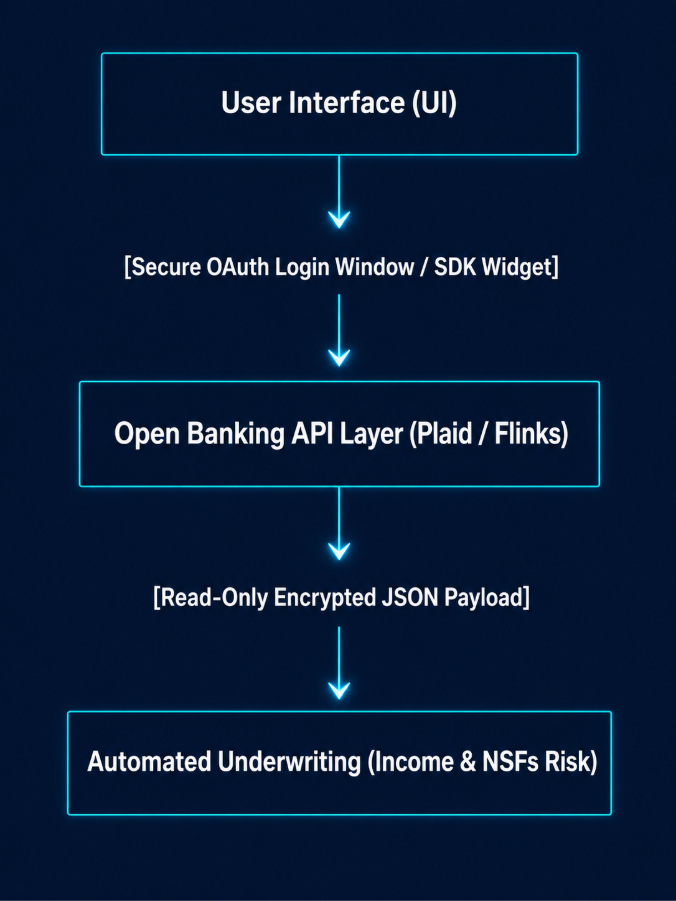
Figure 2: The end-to-end data transmission architecture from the initial client UI authentication down to the automated backend underwriting layer.
Historically, many software tools relied on screen scraping—an insecure method where a script logs into a web portal using raw user credentials to pull text data. However, with modern banking updates and clear federal directions banning unencrypted data extraction, screen scraping has become a massive structural liability. Modern applications must leverage secure API data networks, making the choice between plaid vs flinks for canadian fintech one of the most critical structural decisions your product team will make.
Operational Integration Metric
Direct Read-Only Bank API Connections
Legacy Screen Scraping Architecture
Data Payload Reliability
High (Delivers structured, clean JSON data packets directly from bank servers)
Low (Breaks instantly whenever a financial institution updates its portal interface layout)
Regulatory & Security Standing
Fully compliant with modern data protection and open finance trends
High security liability; exposes raw user login credentials to potential data leaks
User Sign-Up Onboarding Friction
Low (Utilizes secure, authenticated native OAuth authentication windows)
High (Requires users to trust an unverified third-party script with their master bank passwords)
Canadian Financial Enrichment
High (Provides detailed transaction classification, NSF tracking, and salary tags)
Low (Delivers raw, unparsed string text that requires complex regex sorting)
The Evaluation Checklist: How to Choose a Pre-MVP Identity Vendor Without Ruining Conversion
Every additional screen, input field, or document upload step you introduce during your signup process will cause your sign-up rates to tank. If your onboarding sequence introduces extended onboarding friction or demands excessive manual document handling, a substantial portion of prospective users will abandon your application before completing verification.
To prevent onboarding drop-offs while maintaining strict regulatory compliance, your product team must carefully select a modern, optimized identity verification api. Your technical team should evaluate prospective vendors using this strategic engineering checklist:
- Drop-In Web/Mobile SDK Availability: Avoid vendors that require you to build custom camera capture modules from scratch. Choose platforms providing lightweight, pre-optimized Web and Mobile SDK widgets that handle image resolution adjustments, blur filtering, and glare detection automatically on the client side.
- Bilingual Multi-Language String Parsing: The Canadian market requires flawless processing of both English and French language structures. Your chosen API must utilize localized natural language processing (NLP) capable of accurately matching names that contain specific regional accents, hyphens, or distinct formatting conventions without triggering false fraud rejections.
- Low Latency Asynchronous Webhook Integration: A slow backend validation sequence can cause app screens to freeze, ruining the user experience. Your integration must rely on an event-driven webhook architecture that processes verification checks in the background, allowing your frontend UI to maintain smooth state transitions.
- Flexible, Transparent Volume Pricing: Avoid vendors that force you into restrictive annual commitments. To keep your initial burn rate predictable, search for vendors offering flexible, volume-based pricing structures that align directly with your actual monthly user acquisition metrics.
- Passive AI Anti-Spoofing Detection: As automated cyber-attacks grow more sophisticated, basic document scanning is no longer safe. Your verification layer must employ advanced machine learning systems capable of identifying synthetic IDs and digital deepfakes in real time.
To satisfy strict multi-factor verification standards without inducing user friction, startups must deploy AI-driven biometric identity verification to instantly match user selfies against official government IDs while verifying physical liveness passively in the background. This approach stops sophisticated identity theft at the front door while keeping the signup sequence fast and friction-free.
Conclusion
Balancing strict federal compliance mandates, managing third-party API processing expenses, and engineering an optimized user signup flow requires specialized engineering experience. Building a secure digital alternative lending engine or a scalable neobanking platform means configuring an adaptable backend framework that eliminates long-term technical debt before your product goes live.
To transform your financial software concepts into a resilient, production-ready digital asset, partner with the expert product engineering team at Theta Technolabs. Our developers focus entirely on deploying clean, secure, and fully compliant architectures specifically tailored for the highly regulated financial ecosystem.
Our verified engineering blueprint for Canadian financial products prioritizes a highly secure, modern technology stack:
- Frontend Mobile Layer: React Native or Flutter frameworks to deliver optimized, cross-platform UI components and drop-in verification SDK windows smoothly across iOS and Android devices.
- Backend Application Logic: Node.js (TypeScript) or Python (FastAPI) environments configured to manage asynchronous background routines, handle multi-tenant data pipelines, and process idempotent webhook operations safely.
- Core Database Layer: PostgreSQL engines deploying strict ACID compliance structures to protect transaction records and guarantee complete historical ledger security.
- Data Security & Cloud Isolation: Amazon Web Services (AWS) Key Management Service (KMS) combined with mandatory TLS encryption layers to protect user information both at rest and during live server transits.
- Financial Aggregation Infrastructure: Adaptive API middleware connecting your system directly to verified identity engines like Trulioo for automated background validation, paired with Flinks or Plaid for secure, real-time banking data analysis.
Don't let unexpected API traps or compliance gaps delay your launch. Protect your development capital and build a highly scalable, audit-ready platform by consulting with our dedicated engineering specialists today. Reach out to our technical team directly at sales@thetatechnolabs.com to map out your product strategy and launch your compliant platform safely.
Frequently Asked Questions
1. How to choose kyc provider for fintech startup without blowing the engineering budget?
While legacy enterprise networks demand steep annual financial commitments, startup-focused identity vendors provide highly flexible, pay-as-you-go transactional models. Early-stage platforms should prioritize vendors offering usage-based, volume-scaled pricing tiers rather than flat-rate contract lock-ins. Factoring in backend error routing and webhook handling logic during your initial setup ensures your operational costs remain completely sustainable.
2. How does the FINTRAC Dual-Process method impact digital onboarding design?
The Dual-Process method requires your platform's backend to programmatically verify a customer's identity by cross-referencing their personal data points across multiple independent, authoritative national networks (such as an open credit bureau file combined with a separate utility or banking account record). To prevent user abandonment, your integration layer must execute this validation silently in the background in near-instantaneous fashion, removing the need for tedious manual document uploads.
3. Can a pre-MVP startup connect directly to Canadian credit bureaus for alternative lending?
Connecting a new platform directly to primary national credit bureau mainframes requires lengthy corporate vetting procedures, extensive security audits, and substantial upfront capital commitments. For an early-stage MVP platform, the most efficient path is integrating with verified intermediate data aggregators or open banking infrastructure tools. This allows your team to access clean historical transaction data and execute automated credit scoring safely without incurring massive structural overhead.