When a haul truck stops without warning on a mining site, the loss is rarely limited to one machine. A stalled truck can starve the crusher, back up the loading face, and quietly erase a shift's tonnage before the repair even begins. This is why IoT predictive maintenance for haul trucks is drawing attention across the sector. Instead of reacting to failures after they happen, it gives maintenance teams a way to see trouble forming and act before it stops production. For Vancouver mining operators, the question is whether it actually works in harsh, remote conditions, and what it takes to set up.
Why Unplanned Haul Truck Downtime Hurts Mining Operations Most
The repair bill is the smallest part of what haul truck downtime costs. Mining runs as a connected circuit, so when one truck drops out, the whole circuit feels it. The crusher runs below capacity, haul cycles fall behind, and the tonnage you lose in that hour is hard to make back. A failure on the haul road can also create safety exposure that a scheduled workshop repair would never carry.
Fixed interval servicing was designed to manage this risk, but it has two blind spots. It can miss a fault that develops between scheduled checks, which is exactly when unplanned failures tend to strike. At the same time, it often replaces parts that still had useful life left, adding cost without adding reliability. That is the gap predictive maintenance is built to close, and it is the difference at the core of the predictive versus preventive maintenance question.
What IoT Predictive Maintenance Is and How It Works
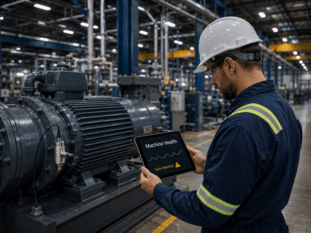
IoT predictive maintenance uses connected sensors to watch equipment health continuously and flag developing faults before they cause a breakdown. Rather than servicing on a calendar, teams service on the actual condition of the machine, which is why the approach is often called condition based maintenance.
So how does IoT reduce unplanned downtime in mining? It turns raw sensor readings into an early warning you can plan around, instead of an emergency that stops the shift.
From condition monitoring to failure prediction
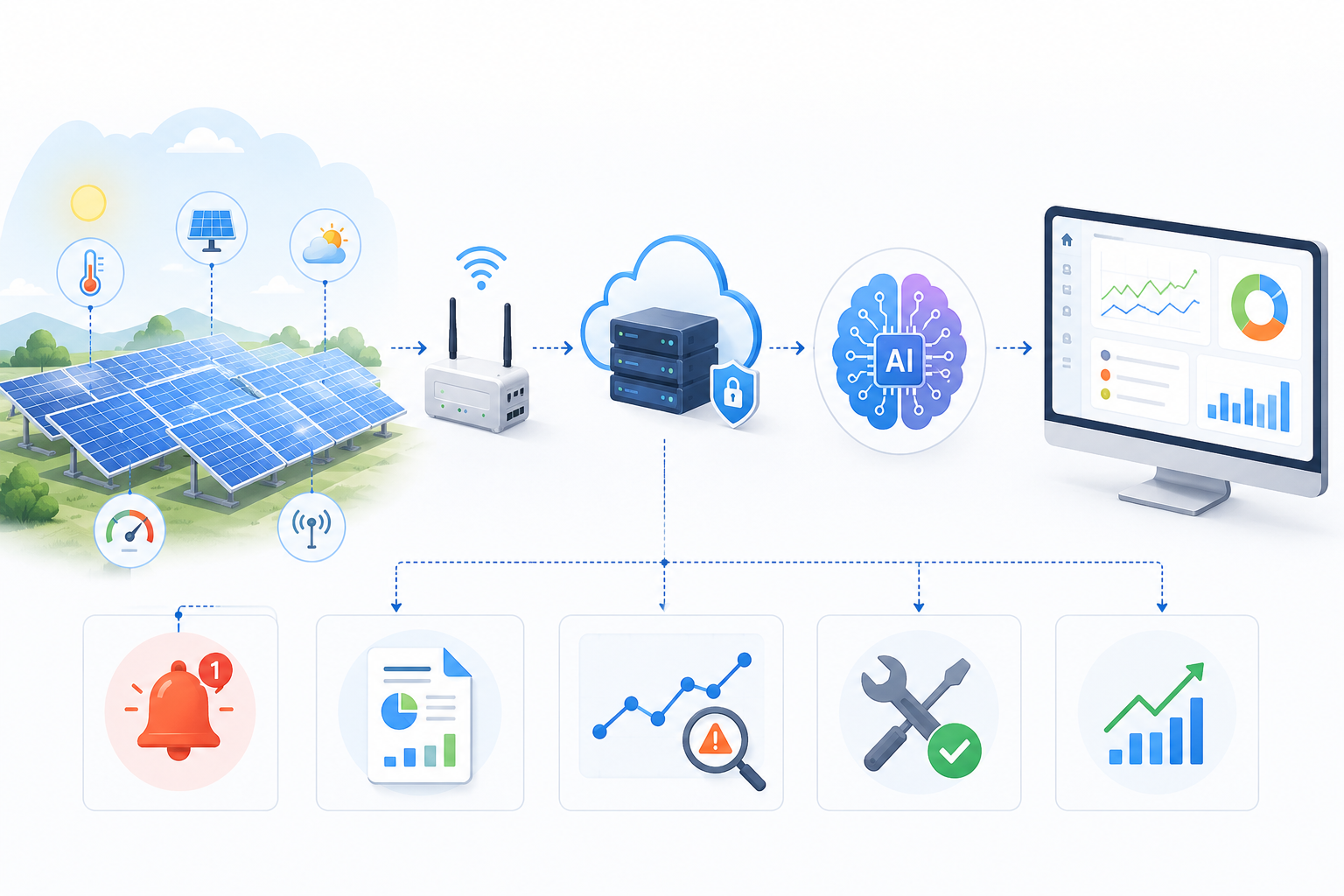
The flow moves in clear steps:
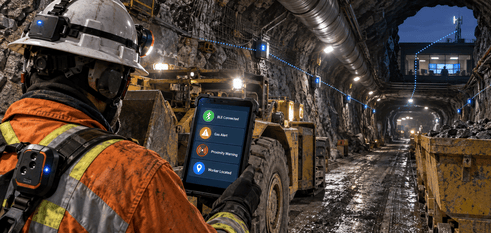
- Sensors on the equipment capture signals such as vibration, temperature, oil condition, pressure, and duty cycle.
- Analytics models learn what normal looks like for each machine and watch for drift away from it.
- When readings trend toward a known failure pattern, the system raises a flag with enough lead time to act.
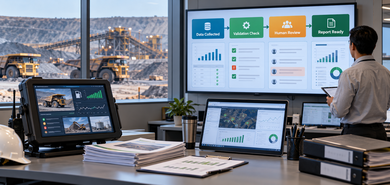
- The maintenance planner reviews the flag and schedules the repair into a planned window.
Turning that stream of signals into a reliable prediction is the role of AI-driven IoT analytics, which is where the data becomes a decision the maintenance planner can use.
Predictive versus preventive maintenance
Preventive maintenance follows a set schedule regardless of how the machine is actually performing. Condition based maintenance acts on measured wear, so a component is serviced when its data says it needs attention, not when the calendar says so. For a haul fleet, that shift can mean fewer surprise failures and less unnecessary part replacement.
Haul Truck and Crusher Failure Modes IoT Can Catch Early
The value of equipment failure prediction depends on whether it works on the machines that actually stop production. For most operations, that means haul trucks and crushers.
Haul trucks
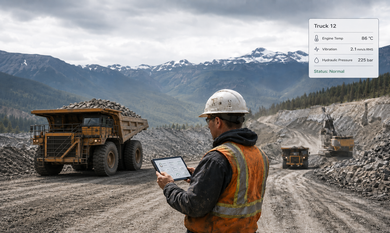
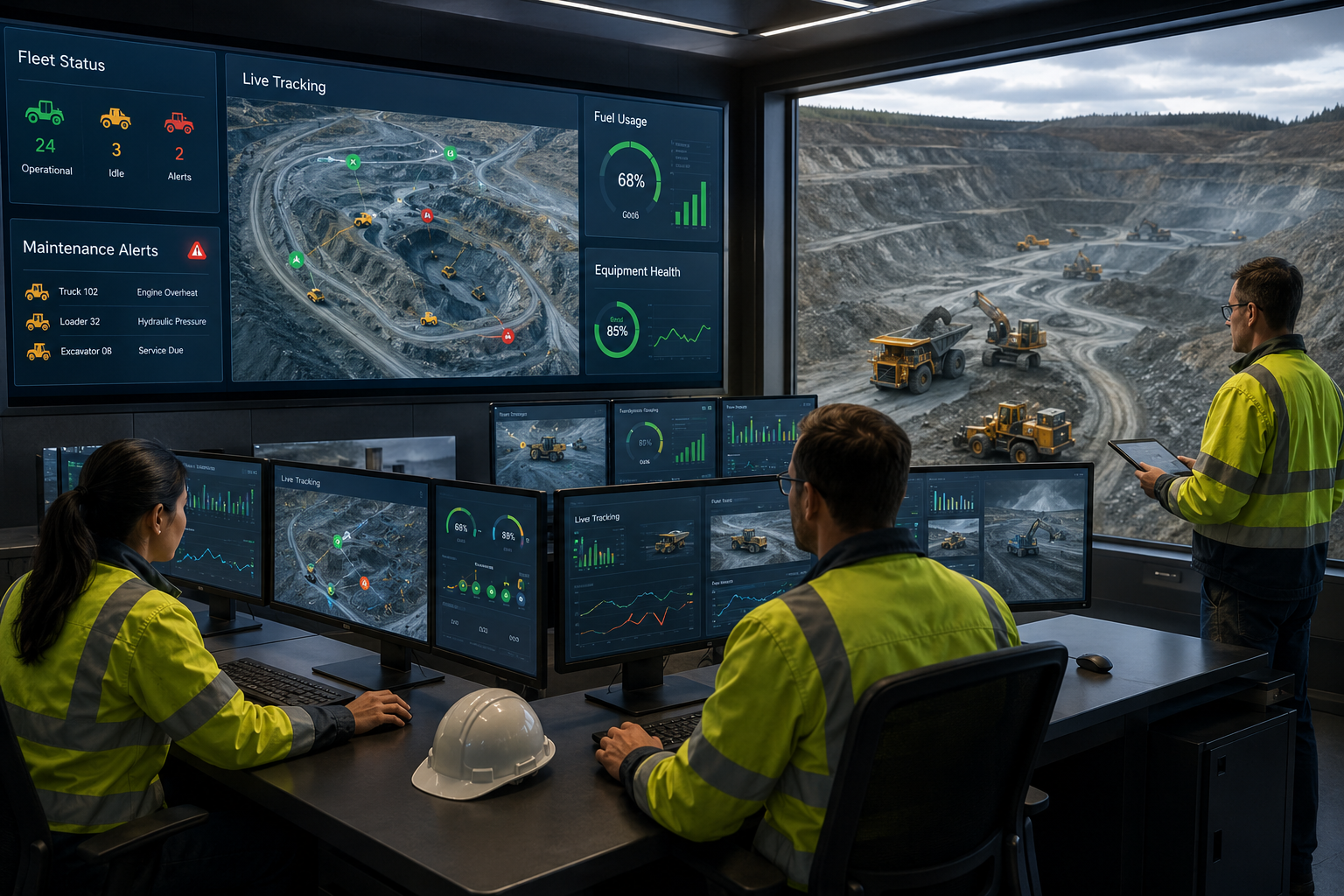
On an ultra-class haul truck, one of the 400-ton class machines that move the load at large open pit sites, several failure modes tend to build gradually before they become critical. Wear in the final drives, differential housings, engine and transmission, together with bearing degradation and hydraulic pump issues, all leave signals as they develop. Those signals differ by subsystem:
- Rising vibration can point to a bearing, final drive, or alignment problem.
- Gradual temperature increases can flag cooling or friction issues.
- Changes in oil condition can reveal internal wear in the drivetrain and hydraulic pumps before it becomes visible on the road.
- Stress on tires and brakes shows up through distinct telemetry rather than vibration or oil analysis, usually Tire Pressure Monitoring Systems and dedicated thermal sensors.
- Duty cycle data adds context, since a truck working steep grades or long hauls ages differently from one on lighter routes.
Read together, these signals can surface a developing fault weeks before it forces the truck off the road. Large open pit haul fleets often rely on this early warning to move a rebuild into a planned window rather than face a haul road failure that halts the circuit.
Crushers
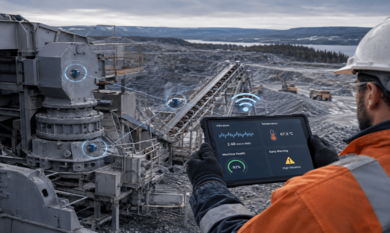
Crushers show their own warning signs. Bearing and liner wear, load imbalance, and abnormal vibration signatures can indicate a developing fault. Crusher predictive maintenance sensors that track vibration and load help teams catch these patterns early, so the crushing circuit is not taken down without notice while the rest of the operation waits. Because a crusher sits at a choke point in the flow, catching a liner or bearing issue in time can protect far more than the one machine.
What This Means for Vancouver and British Columbia Mining Operators
Vancouver sits at the centre of a large mining ecosystem, with many head offices and mining services firms based in the city while operations run across British Columbia and beyond. Sites in the province often face cold weather, remote locations, and heavy dust, all of which accelerate wear and make consistent reliability harder to maintain. That is the kind of environment where continuous condition monitoring pays off.
Reliable, well monitored equipment also supports the safety obligations operators carry in British Columbia. Under WorkSafeBC's Occupational Health and Safety Regulation for tools, machinery and equipment, unsafe equipment must be taken out of service until it has been made safe, and machinery must be maintained in safe working condition. Catching a developing fault early helps operators keep equipment dependable and compliant, though that responsibility always rests with the operator, not the technology. For operators comparing options, purpose built mining technology solutions can help connect this monitoring to the realities of a British Columbia site.
What It Takes to Deploy IoT Predictive Maintenance at Your Site
The practical question most operators ask is what it takes to get started, especially if the site does not have clean sensor data yet. The honest answer is that a program can begin from where the operation is today.
Deployment usually needs sensors on the priority assets, reliable connectivity to move the data from remote areas, and integration with the fleet and telemetry systems already in use. Many operations already collect some machine data through existing telematics, which can give a program a useful head start. Historical and baseline data does improve accuracy over time, because the models learn what normal looks like for each specific machine, but a site without a mature data history can still start, build its baseline, and sharpen its predictions as more operating data accumulates. In practice, expect an initial learning or burn-in period, often a few weeks to a couple of months, while the analytics models map what normal looks like for your specific fleet before they start generating high confidence alerts. Setting up that sensor and data foundation is where IoT development and consulting tends to matter most, since the quality of the condition monitoring depends on how well the underlying layer is built. For a mid size operator, a focused start on the highest value equipment is often more realistic than trying to instrument everything at once, and AI-driven IoT analytics can scale as the program grows.
AI Supports the Maintenance Team, It Does Not Replace Them
One thing to be clear about is what the technology does and does not do. IoT analytics surfaces early warnings and confidence scored recommendations, but it does not make the maintenance decision. The reliability engineer and the maintenance planner review what the system flags, apply their judgement, and decide when and how to act. Accountability stays with the people who know the equipment and the site. Used this way, it gives skilled teams better information and more lead time. It does not run maintenance on its own.
Frequently Asked Questions
Can IoT predictive maintenance really reduce haul truck downtime?
It can, by catching developing faults early enough that a repair moves into planned downtime instead of stopping a shift. Results depend on the equipment, the data available, and how the program is run, so the benefit is best treated as a realistic improvement rather than a fixed figure.
What is the difference between predictive and preventive maintenance for mining equipment?
Preventive maintenance follows a fixed schedule. Predictive, or condition based, maintenance acts on the actual measured condition of the machine. The predictive approach aims to reduce both surprise failures and unnecessary part replacement.
What sensors are needed for haul truck and crusher monitoring?
Common signals include vibration, temperature, oil condition, pressure, and duty cycle telemetry. Each maps to specific failure modes, such as vibration for bearing wear or oil condition for engine and drivetrain health, which is what makes equipment failure prediction possible in the first place.
Is IoT predictive maintenance worth it for a mid size mining operator?
It can be, particularly when the program starts on the highest value assets rather than the whole fleet at once. Beginning focused lets a smaller operation build its baseline data and expand as the value becomes clear.
Moving From Reacting to Anticipating
For Vancouver mining operators, the shift from reacting to failures to anticipating them is what IoT predictive maintenance for haul trucks is really about. By watching equipment condition continuously, catching haul truck and crusher faults early, and keeping skilled teams in control of the decision, an operation can work toward less unplanned downtime and steadier production, even in demanding British Columbia conditions. If you want to assess whether condition monitoring fits your fleet and your site, the team at Theta Technolabs can help you scope a realistic starting point. Reach out at sales@thetatechnolabs.com to start the conversation.
Meta Description -
Learn how IoT predictive maintenance can help Vancouver mining operators reduce haul truck downtime, detect failures early, and improve equipment reliability.
Schema Markup -
<script type="application/ld+json">
{
"@context": "https://schema.org",
"@graph": [
{
"@type": "BlogPosting",
"mainEntityOfPage": {
"@type": "WebPage",
},
"headline": "How IoT Predictive Maintenance Can Reduce Haul Truck Downtime for Vancouver Mining Operators",
"description": "Learn how IoT predictive maintenance helps Vancouver mining operators reduce haul truck downtime, detect failures early, and improve equipment reliability.",
"image": "https://www.thetatechnolabs.ca/path-to-blog-image.jpg",
"author": {
"@type": "Organization",
"name": "Theta Technolabs",
"url": "https://www.thetatechnolabs.ca/"
},
"publisher": {
"@type": "Organization",
"name": "Theta Technolabs",
"url": "https://www.thetatechnolabs.ca/",
"logo": {
"@type": "ImageObject",
}
},
"datePublished": "2026-XX-XX",
"dateModified": "2026-XX-XX",
"articleSection": "Mining Technology",
"keywords": [
"IoT predictive maintenance for haul trucks",
"haul truck downtime",
"Vancouver mining operators",
"mining equipment condition monitoring",
"predictive maintenance in mining",
"condition based maintenance",
"equipment failure prediction",
"crusher predictive maintenance sensors",
"AI-driven IoT analytics",
"mining technology solutions"
],
"about": [
{
"@type": "Thing",
"name": "IoT predictive maintenance"
},
{
"@type": "Thing",
"name": "Haul truck downtime"
},
{
"@type": "Thing",
"name": "Mining equipment condition monitoring"
},
{
"@type": "Thing",
"name": "AI-driven IoT analytics"
},
{
"@type": "Thing",
"name": "Mining technology solutions"
}
],
"audience": {
"@type": "Audience",
"audienceType": "Vancouver mining operators, British Columbia mining companies, mine managers, maintenance planners, reliability engineers, and mining technology decision-makers"
},
"inLanguage": "en-CA"
},
{
"@type": "FAQPage",
"mainEntity": [
{
"@type": "Question",
"name": "Can IoT predictive maintenance really reduce haul truck downtime?",
"acceptedAnswer": {
"@type": "Answer",
"text": "Yes, IoT predictive maintenance can help reduce haul truck downtime by catching developing faults early enough to move repairs into planned downtime instead of stopping a shift. Results depend on the equipment, data quality, and how the maintenance program is managed."
}
},
{
"@type": "Question",
"name": "What is the difference between predictive and preventive maintenance for mining equipment?",
"acceptedAnswer": {
"@type": "Answer",
"text": "Preventive maintenance follows a fixed schedule, while predictive maintenance uses the actual measured condition of the machine. Predictive, or condition based maintenance, helps teams act when equipment data shows signs of wear or failure risk."
}
},
{
"@type": "Question",
"name": "What sensors are needed for haul truck and crusher monitoring?",
"acceptedAnswer": {
"@type": "Answer",
"text": "Common sensor signals include vibration, temperature, oil condition, pressure, duty cycle telemetry, tire pressure monitoring, and thermal data. These signals help detect issues such as bearing wear, drivetrain problems, hydraulic pump issues, and crusher load imbalance."
}
},
{
"@type": "Question",
"name": "Is IoT predictive maintenance worth it for a mid size mining operator?",
"acceptedAnswer": {
"@type": "Answer",
"text": "It can be worth it when the program starts with the highest value assets instead of the entire fleet. A focused rollout helps a mid size mining operator build baseline data, prove value, and expand predictive maintenance over time."
}
}
]
}
]
}
</script>