

Every wealth management firm in Toronto knows the drill. A promising new client submits an inquiry, and then the real work begins. ID documents get emailed in, proof of address sits in a shared folder, someone manually keys client data into three different systems, and a compliance officer cross checks names against sanctions lists by hand. Days pass before the account is actually funded. Meanwhile, FINTRAC's expectations for how that data is verified and stored have only gotten stricter.
RPA for KYC onboarding is increasingly the tool firms reach for to close that gap, not by replacing compliance judgment, but by taking the repetitive, document heavy steps off a team's plate. This piece walks through exactly where client onboarding automation fits into a KYC workflow, what it can realistically deliver, and what Toronto wealth and fintech firms should look for before adopting it.
The Real Cost of Manual KYC Onboarding for Toronto Wealth Firms
Manual onboarding carries costs that show up whether or not a firm feels its current process is broken. The most obvious is time. Document collection, re keying client data across CRM and compliance systems, and running individual PEP and sanctions checks all add days to what could be a same week process. Industry research on financial services onboarding consistently points to complexity and long processing times as the leading reasons prospective clients abandon an application before it's complete, a pattern that shows up across banking, wealth, and fintech onboarding surveys alike.
There is also a compliance cost that has grown sharper in 2026. Bill C-12 gave FINTRAC significantly higher enforcement powers, raising maximum penalties well beyond the previous ceilings and giving the regulator far more room to act on compliance gaps that once drew minor consequences. Firms that once treated a documentation gap or an outdated compliance policy as a minor internal issue now face a regulator with far more room to act on it. Manual processes are more prone to exactly this kind of gap: missed policy updates, inconsistent record keeping, and audit trails that are hard to reconstruct on short notice.
None of this means every firm's onboarding is failing. It does mean the margin for manual error has narrowed, and the client experience cost of a slow process is well documented across the industry. This is where KYC automation wealth management conversations tend to start, not with a crisis, but with a clear-eyed look at what manual steps are actually costing.
Where RPA Fits vs. Where AI Fits in the Onboarding Pipeline
It is worth being precise here, because the two get lumped together often. RPA is built for structured, rule based, repetitive work: pulling data from a submitted document, populating that data into a CRM and a compliance system, checking a name against a sanctions list, and flagging anything that does not match expected patterns. It follows defined rules consistently and does not get tired doing it a thousand times.
AI and machine learning come in for the judgment calls, assessing whether a client's risk profile warrants enhanced due diligence, spotting unusual patterns across a transaction history, or scoring a case for review priority. In a well built onboarding pipeline, RPA and AI often work together, but RPA is usually the layer that handles the bulk of the document and data mechanics, which is also where most manual hours are currently lost. This distinction matters for firms comparing RPA bots for compliance against broader AI platforms, since the two solve different parts of the same problem.
The RPA Powered KYC Workflow, Step by Step
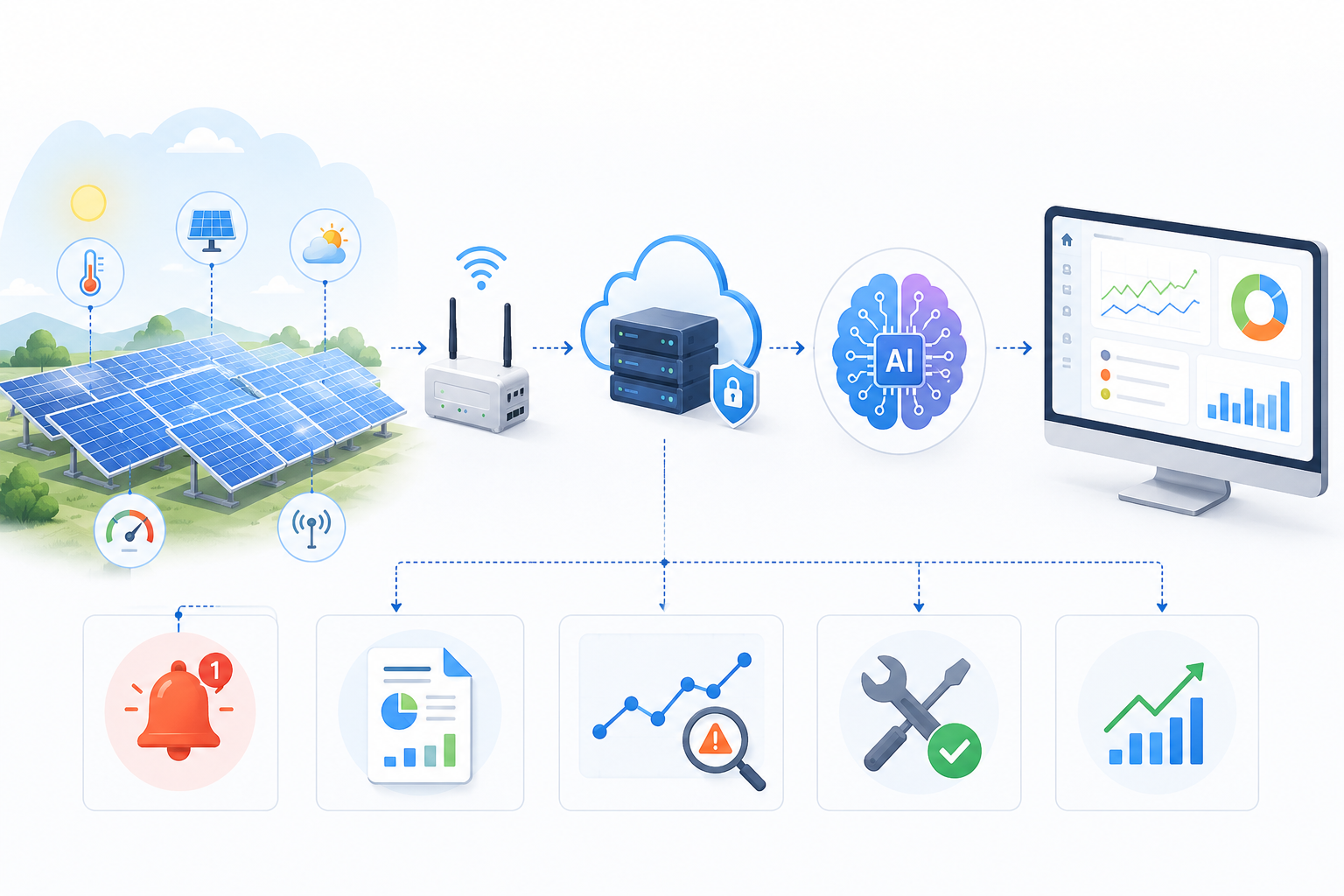
A typical RPA driven KYC and onboarding flow for a wealth or fintech firm looks something like this:
- Document intake. The client submits ID, proof of address, and source of funds documentation through a digital form or portal.
- OCR based data extraction. This step typically pairs RPA with OCR and intelligent document processing to read submitted documents and extract the relevant client data automatically, rather than a staff member retyping it. This combination is a core part of document verification automation.
- Identity verification cross check. The extracted data is checked against one of FINTRAC's recognized identity verification methods, such as government issued photo ID or a dual process check.
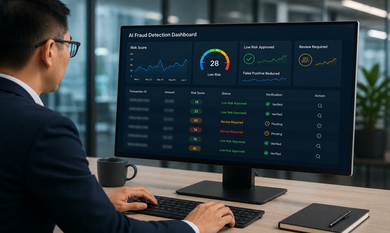
- Automated PEP and sanctions screening. The bot runs the client's details against politically exposed persons and sanctions lists and flags any matches for human review, a key piece of AML and KYC checks automation.
- Data population. Verified client information is written directly into the CRM and compliance systems, eliminating duplicate manual entry.
- Exception handling. Anything that does not clear automatically, a mismatched name, an expired ID, an unclear document, is routed to a compliance officer, not silently approved.
- Audit trail generation. Every step is logged, which matters directly for FINTRAC's requirement that reporting entities keep KYC records for at least five years and be able to produce them within 30 days of a request. This step is central to FINTRAC compliance automation overall.
That last step is often underrated. A lot of the real value of automation is not just speed, it is that the audit trail exists automatically, instead of being reconstructed under pressure when a regulator asks for it. FINTRAC's own recordkeeping guidance sets out exactly how long different types of records must be retained and how they need to be produced on request. Firms exploring this kind of automation as part of a broader compliance strategy can look at RPA services in Canada to understand how the implementation side typically works.
What Toronto Wealth and Fintech Firms Gain From This
The outcomes firms typically look for from this kind of automation are straightforward: faster time from application to funded account, fewer manual data entry errors feeding into compliance systems, and records that are audit ready without a scramble, which directly supports reduce onboarding time wealth management goals. Some published industry benchmarks give a sense of scale. State Street Bank has reported cutting its time from account opening to trading by 49% after adopting RPA and intelligent automation for KYC, alongside measurable cost savings. That is their result, not a guarantee for every firm, but it illustrates what is achievable when the workflow is well designed.
For Toronto specifically, the case is sharpened by how concentrated the city's fintech and wealth management sector is. Firms are often competing for the same sophisticated client base, and onboarding speed has become a genuine differentiator rather than a back office detail. Broader fintech software solutions built around this kind of automation are increasingly part of how firms stay competitive on both compliance and client experience at once, which is also where digital onboarding for wealth firms becomes a practical priority rather than a nice to have.
Getting Started: What Toronto Firms Should Look For in an RPA Partner
Not every automation vendor understands the compliance side of wealth management, so it is worth being selective. A few things to check for:
- FINTRAC aware implementation experience. The partner should understand identity verification methods and record keeping rules well enough to design around them, not just automate generically.
- Integration with your existing stack. The RPA layer needs to talk to your current CRM and compliance software without a rebuild.
- Human in the loop design. Any credible implementation routes exceptions to a person. Full automation with no review step is a compliance liability, not a feature.
- Familiarity with the Canadian regulatory environment. Working with a team that understands Toronto's fintech landscape and Canadian compliance requirements, whether delivered locally or through a dedicated regional team, tends to shorten the learning curve.
Firms weighing these criteria can also look at AI and automation solutions for Toronto businesses to see how automation is typically scoped and delivered for the local market.
Frequently Asked Questions
Is RPA alone enough for FINTRAC compliant KYC?
No. RPA handles the repetitive verification and data entry work, but a compliant program still needs human oversight and risk based judgment, particularly for higher risk or flagged clients. RPA supports the compliance function, it does not replace the compliance officer.
How long does it take to implement RPA for client onboarding?
It varies by firm, but most implementations take anywhere from a few weeks to a few months, depending on how many systems need to be integrated and how customized the workflow is.
Does RPA reduce FINTRAC audit risk?
It can help. Automated audit trails and faster record retrieval make it easier to meet FINTRAC's requirement to produce records within 30 days of a request, though the underlying compliance program still needs to be sound.
Can RPA integrate with our existing CRM and compliance software?
In most cases, yes. Integration complexity depends on the specific systems in place, which is why it is worth having that conversation early with whoever is implementing the automation.
Final Thoughts
Manual KYC and onboarding processes are not inherently broken, but they carry real, well documented costs in staff time, client drop off, and compliance exposure that has only grown under Bill C-12. RPA will not replace the judgment a compliance team brings, but it can take the repetitive document and data work off their plate, leave a cleaner audit trail, and get clients funded faster.
If you are a Toronto wealth or fintech firm exploring what this could look like for your onboarding process, reach out to our team at Theta Technolabs at sales@thetatechnolabs.com to talk through what a compliant, well integrated setup would actually involve.