

Long emergency wait times are one of the most frustrating problems in healthcare today, and the reason is usually simple: hospitals run out of visible capacity long before they actually run out of real capacity. A bed sits occupied for hours after a patient is medically ready to leave, so the next patient waiting for that bed ends up stuck in the ED instead. This is exactly what's playing out in Calgary hospitals, where wait times have become a regular topic of local news coverage rather than an occasional bad night.
The good news is this isn't an unsolvable problem. AI patient flow tools are already helping hospitals forecast patient volume, speed up triage, and predict which beds will free up sooner, so staff can act ahead of a surge instead of reacting to one. In this blog, we'll break down why ED wait times build up in the first place, what these AI tools actually do in practice, and what it realistically takes for a hospital to put one to use.
Why Emergency Rooms Get Backed Up in the First Place
Long emergency wait times rarely start in the emergency room. That's the part most people miss, and it's the part most articles on this topic skip over too. The ED is usually the visible symptom of a problem sitting somewhere else in the hospital.
Here's the actual chain: a patient is ready to be discharged from an inpatient unit, but the discharge process — paperwork, transport arrangements, follow-up scheduling — takes hours longer than it should. That bed stays occupied. Meanwhile, a patient in the ED who needs to be admitted has nowhere to go, so they wait in a hallway or chair instead of a ward. Add a busy respiratory virus season or a staffing gap on top of that, and the whole system backs up from the inside out.
This isn't unique to Calgary. Health systems across Canada report the same pattern. According to recent news coverage of a Canadian Institute for Health Information study, the causes of Canada's long emergency department wait times often lie far beyond the emergency room itself, with shortages in hospital beds, long-term care, and community supports creating a bottleneck that leaves some patients waiting far longer than they should. Calgary is simply one of the more visible examples of a pressure point that exists almost everywhere hospital demand outpaces bed turnover.
What AI Patient Flow Tools Actually Do
Strip away the buzzwords and the technology comes down to three practical functions:
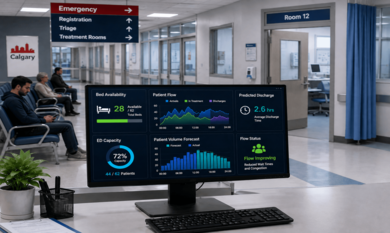
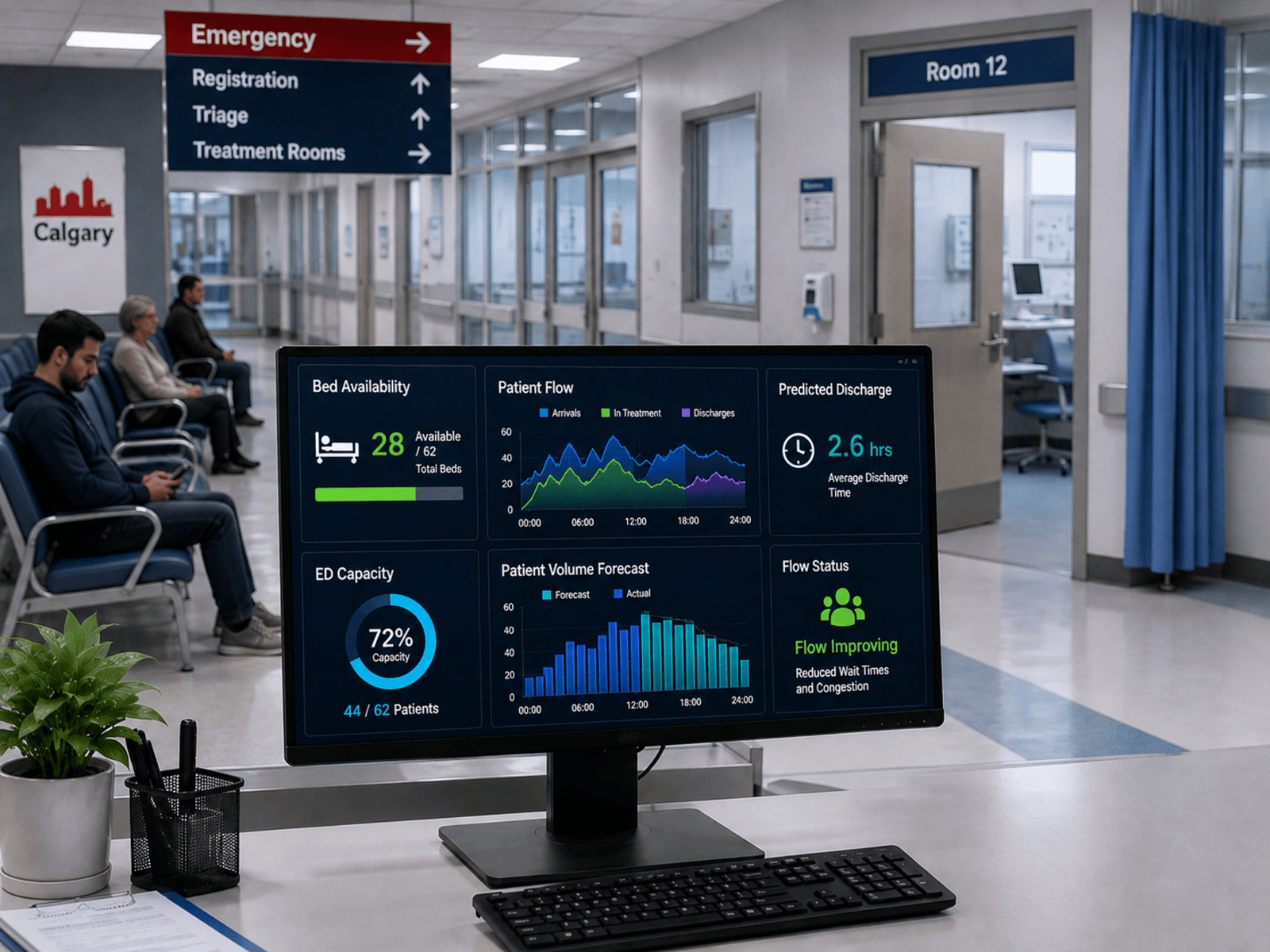
- Predictive volume forecasting — Looks at historical admission patterns, seasonal trends, and local factors like flu season timing to estimate how many patients will arrive over the next several hours or days, so staffing can adjust ahead of a surge instead of scrambling once the waiting room fills.
- AI in emergency departments for triage and intake — Rather than replacing triage nurses, these tools support faster, more consistent prioritization. Symptom-checking assistants can help direct lower-acuity cases toward urgent care or telehealth before they add to ED volume, while algorithms working alongside triage notes can flag which incoming patients are more likely to need admission. This is where AI triage tools typically sit in the workflow.
- Bed and discharge prediction — Arguably the highest-impact use case. Predictive analytics in healthcare applications can flag which inpatients are likely to be discharge-ready within the next 24 hours, prompting care teams to start paperwork, transport, and follow-up steps earlier instead of waiting until a doctor signs off at the last minute.
None of this is science fiction. It's closer to what airlines do with flight scheduling — using data that already exists inside the system, just not currently being used to its full potential.
How Predictive Bed Management Actually Cuts Wait Times
The connection between bed management and ED wait times is direct, even if it's not obvious at first glance. Every hour a discharge-ready inpatient stays in their bed longer than necessary is an hour that bed isn't available for the next admission — which means the next patient waits in the ED instead.
Hospitals that have adopted predictive discharge tools generally report the same pattern: earlier visibility into which patients are close to discharge lets care coordination teams start the downstream steps (transport, home care setup, pharmacy) proactively rather than reactively. That shortens the gap between "medically ready to leave" and "bed is actually free." It's not a dramatic fix on its own, but stacked across dozens of beds and hundreds of patients a month, it meaningfully reduces the bottleneck that shows up as ED overcrowding solutions are meant to address in the first place.
It's worth being upfront here — this kind of tool doesn't eliminate wait times, and results vary by hospital size, existing workflow maturity, and how well the system integrates with what staff already use daily. Anyone promising a guaranteed percentage reduction without knowing your hospital's specific bottlenecks isn't being straight with you.
What It Actually Takes to Deploy This
This is the part most articles gloss over. Getting a predictive patient flow system running isn't plug-and-play. A realistic rollout generally looks like this:
- Data readiness first — The predictive models are only as good as the data feeding them, which means EHR integration has to be solid before any forecasting model can produce reliable output.
- Start with a single-unit pilot — Most successful rollouts begin on one department rather than a hospital-wide launch, giving clinical and administrative staff room to get comfortable with how recommendations show up in their existing workflow.
- Surface it where staff already work — Ideally inside the EHR or a dashboard they already check, not a separate system they have to remember to open.
- Invest in staff buy-in — A predictive tool that clinicians don't trust or understand gets ignored within a few weeks, no matter how accurate the underlying model is. Training and a clear explanation of why the system is flagging something tends to matter more than the technology itself.
This overall approach to hospital patient flow management is what separates a pilot that sticks from one that quietly gets abandoned six months in.
Choosing the Right AI Partner for Patient Flow
If a hospital network is evaluating an AI development partner in Calgary for this kind of work, a few things matter more than a flashy dashboard:
- Actual healthcare compliance experience — alignment with Alberta's Health Information Act (HIA) and Canada's federal PIPEDA isn't optional in this space.
- Integration capability — a tool that can't talk cleanly to the existing EHR is dead weight regardless of how good its predictions are.
- A track record with predictive systems specifically, not just general software development, since forecasting for AI-driven bed management is a different discipline than building a typical business application.
Frequently Asked Questions
What is AI patient flow management?
It's the use of predictive software to forecast patient volume, support triage decisions, and anticipate bed and discharge timing, so hospitals can allocate staff and space ahead of demand rather than reacting to it after the fact.
Can AI actually reduce ER wait times in Calgary hospitals?
It can meaningfully ease pressure by addressing upstream bottlenecks like discharge delays and bed availability, which are the real drivers of long waits. It's not a guaranteed fix on its own, and results depend on how well the tool integrates with existing hospital operations.
How long does it take to implement predictive patient flow tools?
Most rollouts start with a pilot on a single unit, which can take a few months once data integration and staff training are accounted for. A hospital-wide deployment typically follows in phases after the pilot proves out.
Is AI patient flow software compliant with Canadian healthcare data regulations?
It should be, provided the vendor builds the system around Alberta's Health Information Act (HIA) and Canada's federal PIPEDA requirements rather than assuming U.S.-style compliance frameworks apply. This is a non-negotiable checkpoint when evaluating any healthcare AI vendor, not an afterthought.
Does this replace hospital staff or clinical judgment?
No. These tools support decision-making with earlier visibility into patterns — they don't replace a clinician's judgment on individual patient care, and no credible vendor claims otherwise.
What's a realistic first step for a hospital considering this?
Start small. A single-department pilot focused on one clear bottleneck (usually discharge timing) gives a hospital real data on whether the approach fits their workflow before committing to a larger rollout.
Where This Fits at Theta Technolabs
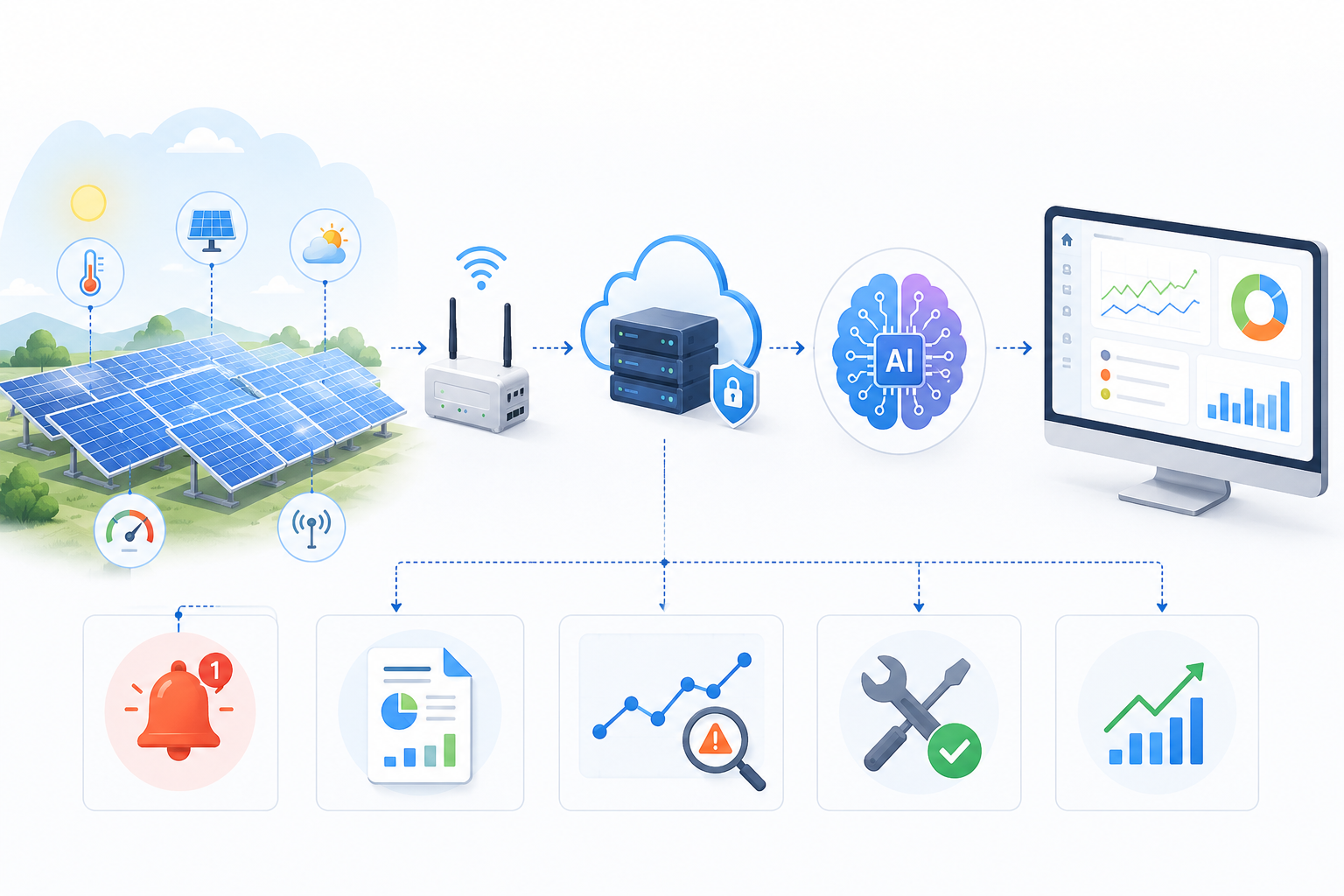
Predictive patient flow systems typically run on a mix of machine learning models for forecasting, cloud infrastructure for real-time data processing, and EHR integration APIs to keep everything synced with what clinical staff already use. That's the same foundation we work with when we build digital healthcare solutions for hospital networks — forecasting models trained on real operational data, cloud-based dashboards that fit into existing clinical workflows, and integration layers that connect cleanly with EHR systems rather than sitting apart from them. Bringing ER wait times down to a manageable level comes down to getting these three pieces working together well.
If a hospital network in Calgary is exploring what this could look like for their own operations, our team at Theta Technolabs works on this kind of healthcare predictive analytics infrastructure. Reach out at sales@thetatechnolabs.com to talk through what's realistic for your setup.