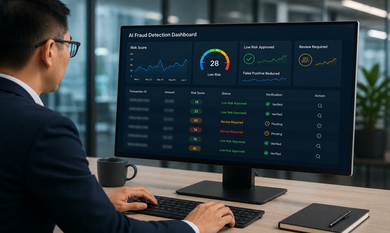
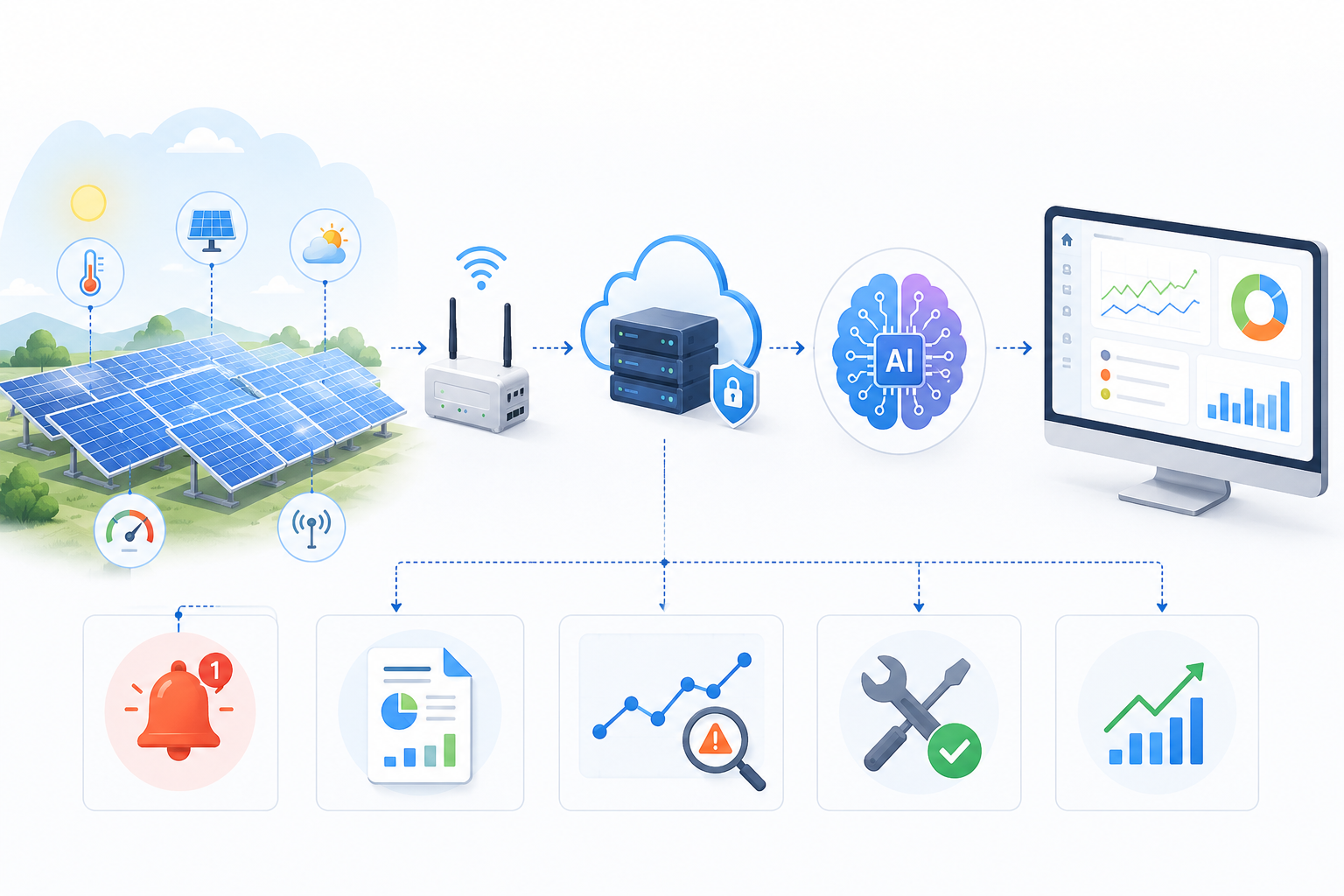
For lending teams, AI credit decisioning is not only about producing a risk score. The surrounding workflow also needs to manage data quality, decision logic, explanations, review, records, and oversight. That is important for AI credit decisioning Montreal projects, where machine learning may interact with customer data and regulated financial processes.
For teams considering AI lending compliance Canada requirements, the practical starting point is to treat machine learning as one controlled part of a wider lending system. The platform should show how data enters the process, how a risk result is generated, how business rules use it, when a person reviews the case, and what is recorded afterward.
How AI Supports a Modern Credit Decision Workflow
A lending workflow can use AI to identify patterns in application data, estimate risk, support routing, or prioritize cases for review. In AI credit scoring Canada projects, the machine learning component usually sits between data preparation and lender-defined rules rather than replacing the complete lending process.
A practical sequence may include application intake, data validation, feature preparation, model scoring, business-rule evaluation, review routing, and decision records. machine learning credit risk models may produce a risk-related output, but the lender still defines how that output is used within credit policy.
AI-Assisted and Automated Decisioning
An AI-assisted process gives a credit analyst or reviewer information that supports a decision. An automated process may move an application through defined rules without a person making every intermediate judgment.
For automated credit decisioning Quebec projects, teams should document which steps are automated and which remain under human control. Montreal organizations building this architecture may work with an AI development company in Montreal to connect models with application workflows, internal rules, reviewer interfaces, and existing systems.
Build Governance into the Decisioning Architecture
A reliable lending system needs visible control points from the beginning. AI governance for lenders should cover the predictive model, the data entering the system, the rules acting on model outputs, the people who can make changes, and the records explaining how a case moved through the workflow.
Validate Data Before Scoring
Input data should be checked for source, completeness, formatting, and suitability for the intended use. Missing or inconsistent information should follow a defined handling process.
Teams should also be able to trace important fields back to the relevant source or transformation step, especially when a result needs review.
Keep Decision Records Traceable
A lending platform should preserve enough context to understand how a decision was reached. Depending on the workflow, this may include relevant input information, model version, applicable rules, generated outputs, exception flags, reviewer actions, and final workflow state.
Traceability does not mean retaining unnecessary customer information. Record design should follow the lender's privacy, security, operational, and retention requirements.
Control Changes to Models and Rules
AI model risk management also depends on controlled changes. Access to production models, thresholds, decision rules, and deployment settings should be limited to authorized roles. Updates should move through testing, review, versioning, and approval processes.
Consumer Protection and AI Use in Banking
AI systems in financial services operate within existing responsibilities around customers, data, security, and communication.
The Financial Consumer Agency of Canada, or FCAC, explains that organizations may use AI to improve processes, analyze data, or improve customer experience. Its guidance also identifies possible AI-related risks involving privacy, cybersecurity, misinformation, fraud, and scams.
FCAC also notes that existing financial consumer protection measures can apply to certain uses of AI. For federally regulated financial entities, its guidance points to requirements such as providing information in clear, simple, and non-misleading language. It also notes that federally regulated financial entities must follow Canadian privacy laws when collecting and using personal information.
You can review the official Financial Consumer Agency of Canada guidance on artificial intelligence in banking.
For Montreal lenders, the scope needs to be considered carefully. FCAC supervises federally regulated financial entities for the consumer protection measures that apply to them. A lending company should therefore determine which federal, provincial, and other requirements apply to its own organization and activities rather than assuming one framework applies to every lender.
From a system-design perspective, teams should know what customer information is collected, how it is used, which actions are automated, how exceptions are handled, and what customer-facing information the system generates.
Make Explainability Useful to the People Reviewing Decisions
Explainable AI in lending should not be treated as a single dashboard feature. Different users need different levels of information.
A data science team may need technical diagnostics and model version details. A credit or risk team may need factors relevant to a risk assessment. An operational reviewer may need enough context to decide whether escalation is required.
The explanation should match the role of the person using it. A technical model output may help an ML engineer but may not be useful to credit operations.
Any explanation layer should also remain connected to the actual model output, applicable business rules, and recorded workflow state. It should not generate a convincing explanation that cannot be traced back to how the system actually processed the application.
Human Review Should Be a Designed Workflow
Human review works best when it is built into the lending process rather than added as an emergency fallback. Applications may be routed for review when data is incomplete, validation checks conflict, a case falls outside intended operating conditions, or internal policy requires additional verification.
The reviewer should receive enough information to understand why the application reached the review queue, such as relevant application details, risk assessment, validation flags, supporting records, and previous system actions.
The interface should also make the next permitted actions clear, such as requesting information, correcting data through an approved process, recording a decision, or escalating the case.
Building this workflow usually requires more than training a predictive model. machine learning services in Canada can cover data preparation, model development, deployment, monitoring, and integration with review processes.
Monitor the System After Deployment
A credit model can behave differently over time as application patterns, data sources, products, or operating conditions change. Monitoring should therefore cover more than whether an API is online.
Teams can review changes in input patterns, missing-data behaviour, output distributions, operational errors, and unusual decision patterns. They should investigate whether a data-source change, software update, or business-rule adjustment has affected the workflow.
Updates to features, training data, algorithms, integrations, or decision rules can alter system behaviour. Testing, versioning, review, and rollback planning help keep those changes controlled.
Monitoring should also include customer-facing parts of the process. If an AI-enabled workflow creates confusing information, inconsistent notifications, or incorrect routing, the issue may be in the surrounding application logic rather than the model itself.
This is also relevant to the consumer-protection context highlighted by FCAC, which emphasizes risks around inaccurate information, privacy, and other customer-facing uses of AI.
Connect the ML Component with the Wider Lending Platform
A credit model is useful only when it can operate safely inside the wider lending application. That often means connecting borrower intake, verification services, internal databases, decision rules, document workflows, reviewer tools, notifications, and reporting.
The integration layer should preserve context between systems. A reviewer should not need to reconstruct a decision from disconnected tools. Records should remain associated with the relevant application and workflow state.
This is why credit decisioning often becomes part of a broader fintech app and software development in Canada project rather than a standalone ML deployment.
A Practical Control Checklist for Montreal Lending Teams
Before moving an AI-assisted credit workflow into production, teams can review the main control areas together.
This checklist does not replace legal review, credit policy, privacy assessment, security controls, or requirements that apply to a specific lender. It helps make sure the technical workflow exposes the areas that risk, compliance, operations, and engineering teams need to examine.
Frequently Asked Questions
What is AI credit decisioning?
AI credit decisioning uses machine learning or related analytical methods to assess lending information and support parts of a credit-risk or application decision workflow.
What risks does FCAC highlight around AI?
FCAC identifies possible risks involving privacy, cybersecurity, inaccurate information, fraud, and scams. It also notes that existing financial consumer protections can apply to certain uses of AI.
Does FCAC supervise every lender in Montreal?
No. FCAC states that it supervises federally regulated financial entities. A Montreal lender should determine which regulatory authorities and requirements apply to its organization and activities.
Why is explainability important in credit decisioning?
Explainability helps technical, risk, operations, and compliance teams understand relevant decision factors, investigate unexpected results, and support informed review.
Should every AI-generated credit result be automatically accepted?
No. The workflow should define how model outputs are used, when business rules apply, when review is required, and who is responsible for the final action.
Building AI Credit Decisioning with Compliance in Mind
A well-designed credit decisioning system combines reliable data, controlled machine learning, understandable outputs, review workflows, customer communication, decision records, and ongoing monitoring. The architecture should support the lender's compliance and risk processes rather than assume the model can manage them by itself.
Theta Technolabs develops machine learning and fintech systems using technologies such as Python, PyTorch, and Scikit-Learn, with integrations around wider financial workflows. For questions or to discuss your AI credit decisioning requirements, contact us at sales@thetatechnolabs.com.