

Manufacturers can collect large amounts of data and still struggle to answer a basic operational question: where is a specific material, batch, or finished item, and what has happened to it so far? Information may exist across scanners, machines, warehouse records, spreadsheets, and business systems, but disconnected data does not create supply chain visibility.
IoT traceability connects physical items and operational events with digital records. When those records are linked to production, inventory, and order context, manufacturers can follow movement, status, and exceptions more clearly. This article explains how that process works, where IoT fits, and how Halifax manufacturers can approach implementation without adding unnecessary complexity.
Traceability and Visibility Are Related, but They Are Not the Same
Supply chain traceability records the history of an item, batch, component, or asset as it moves through defined stages. IoT supply chain visibility uses that traceability data, together with operational context, to show what is happening and where attention may be needed.
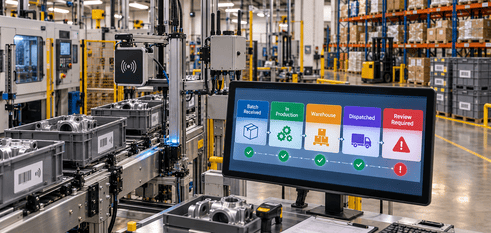
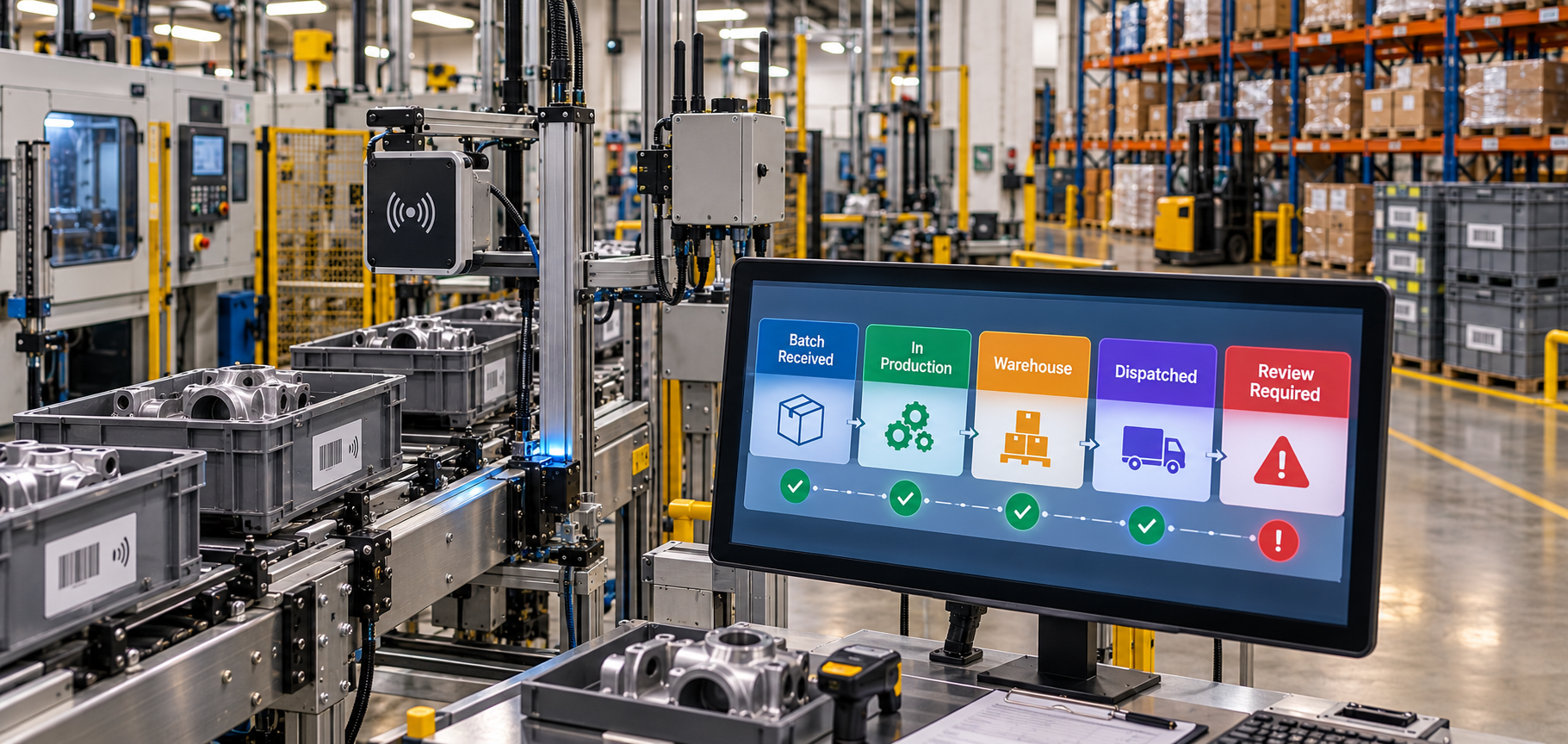
For example, a batch may be recorded at receiving, production, storage, and dispatch. Those events create a traceable history. When they are linked and presented in an operational system, teams can see current status and investigate gaps.
The GS1 Global Traceability Standard provides a framework for designing interoperable traceability systems across end-to-end supply chains. It focuses on consistent identification of traceable objects and standards-based capture and sharing of data about their movements and events, helping organizations connect traceability information across supply-chain participants.
How IoT Turns Supply Chain Activity into Traceable Data
IoT is useful for traceability when it captures or transports events that matter to the manufacturing process.
Give the Item, Batch, or Asset an Identity
A manufacturer may use RFID tags, barcodes, QR codes, or another identifier depending on the environment and workflow.
RFID supply chain tracking can support automatic identification where tagged items pass suitable readers. Barcodes and QR codes are useful where a controlled scan is practical. These technologies identify what the item or batch is.
Sensors serve a different purpose. They can capture temperature, vibration, position, or equipment state when those conditions matter. Identification and sensing may work together, but they are not the same function.
Capture Events as the Item Moves
Once an item has an identity, industrial IoT tracking can record relevant events such as receiving, transfer to production, process completion, warehouse movement, and dispatch.
A useful event record should answer practical questions: What moved? When? Where was it recorded? Which batch, order, or process was involved? If a sensor reading matters, what condition was observed?
Connect Events to Business Context
A practical flow can be:
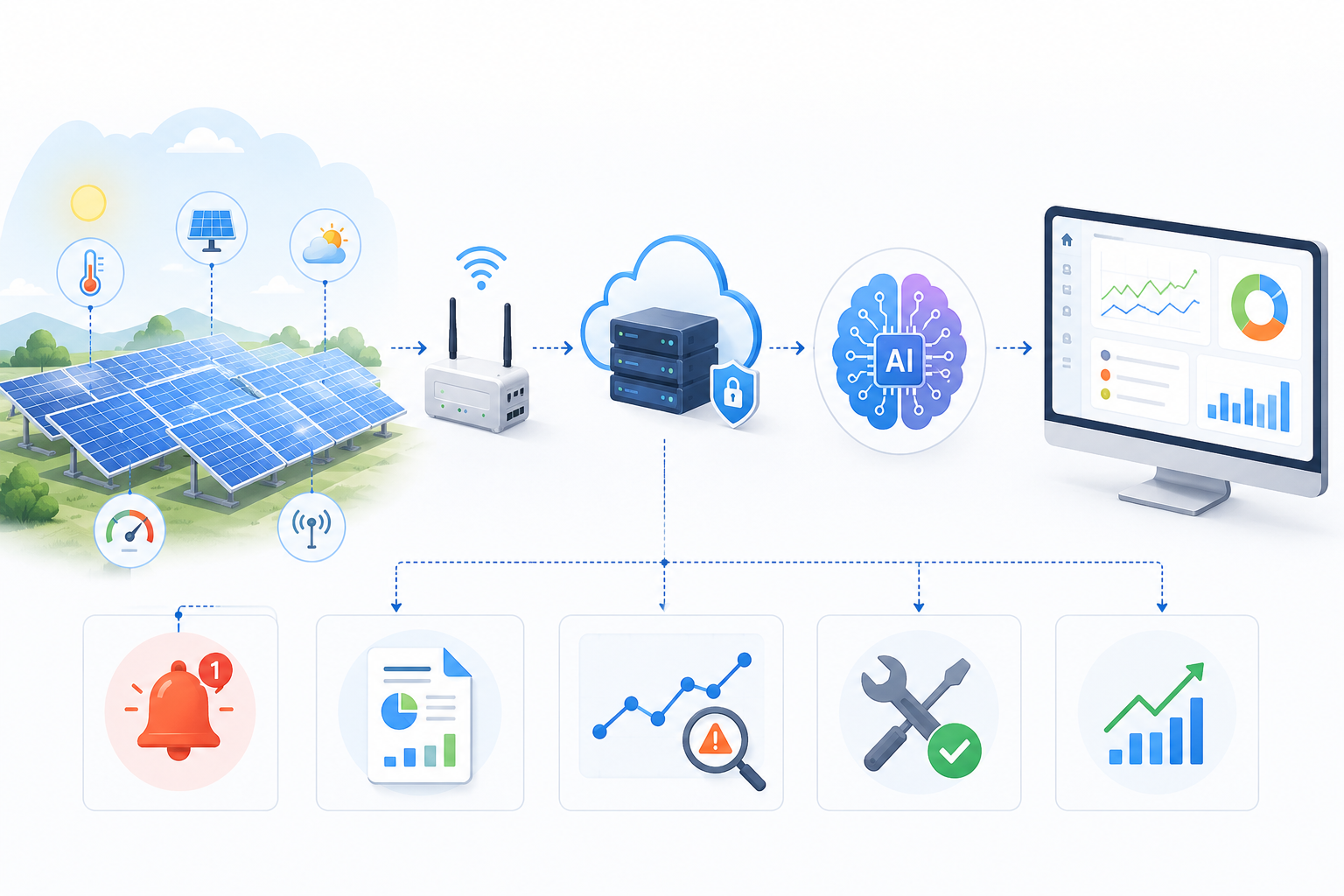
Physical item → identifier or sensor → gateway → IoT platform → operational system → dashboard or alert
Gateways collect device or equipment data and pass it to cloud or on-premise services. Protocols such as MQTT can support messaging, while APIs can connect IoT data with other applications.
IoT & BLE development services in Canada can support device integration, gateways, cloud platforms, and monitoring. The main design requirement is to connect each event to a business object such as a batch, work order, shipment, or location.
What Supply Chain Visibility Can a Manufacturer Actually Gain?
The useful outcome is not a dashboard filled with every device reading. It is a clearer view of important events across material, production, warehouse, and outbound flows.
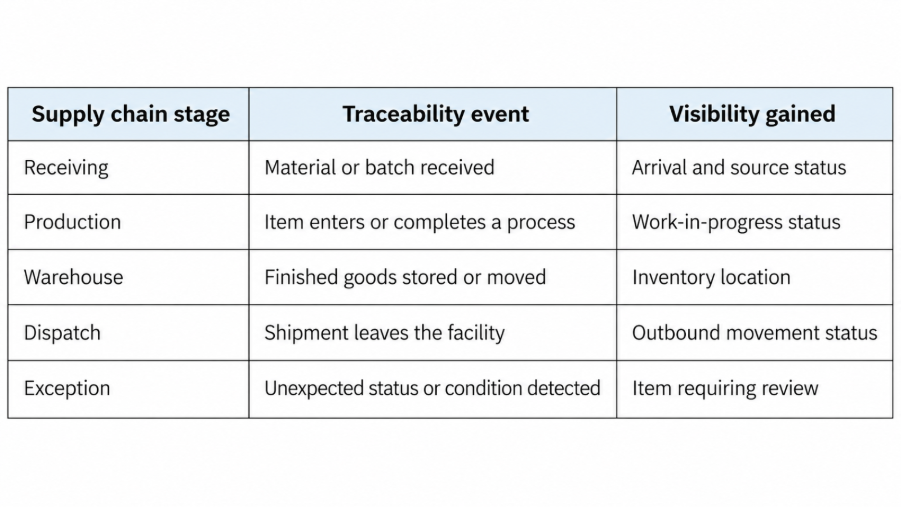
With IoT inventory tracking, a manufacturer can associate movements with specific storage areas, batches, or items. Real-time supply chain monitoring can also surface missing events or unexpected conditions sooner, provided the underlying identifiers, devices, and integrations are reliable.
Different users need different views. A warehouse manager may need the last known location of a batch, while a production manager may need its recorded process stage. AI-driven IoT analytics services can support dashboards and analysis that turn connected data into clearer operational information.
A Practical Halifax Manufacturing Scenario from Receiving to Dispatch
Consider a hypothetical Halifax manufacturer that receives components from suppliers, processes them at its facility, stores finished goods, and later prepares customer orders for outbound distribution.
At receiving, each incoming batch is identified and connected with its supplier or purchase record. When the batch moves into production, a scan or connected event records the transition. Relevant equipment or process data can be attached where it contributes to product history.
After processing, the finished batch is recorded as it moves to a warehouse location. At dispatch, the outbound event connects the correct batch with the shipment record.
This creates a practical form of IoT traceability for manufacturing. If an expected event is missing, the system can show the gap for staff to investigate rather than assuming what happened.
The value comes from maintaining a connected sequence of recorded events, so teams do not have to reconstruct product history from several disconnected sources after a problem occurs.
IoT, MES, ERP, and WMS Have Different Jobs in Traceability
An effective manufacturing traceability system does not require every application to perform the same job.
The IoT layer captures or transports physical events and sensor data. A manufacturing execution system, or MES, can provide production context. A warehouse management system, or WMS, can provide inventory location and movement context. An enterprise resource planning system, or ERP, may connect traceability information with materials, suppliers, purchasing, and orders.
APIs or integration services can connect these systems so an event has both physical and business meaning. A reader event, for example, becomes more useful when the identifier can be related to a specific batch and work order.
The goal is not to copy every data point into every system. It is to make the right traceability events available where people need them while preserving a clear source for each type of information.
Start With One Traceability Problem Before Expanding the System
A manufacturer does not need to digitize every material movement at once. A small, defined workflow is easier to validate.
Define the Question the System Must Answer
Start with one operational question: Where is this batch? Which production step has it completed? Which material was used in this finished item? Which shipment contains this batch?
This keeps the project focused on a real decision or investigation instead of collecting data simply because a device can generate it.
Identify the Events and Existing Data Sources
Map the minimum events required to answer that question. Review what already comes from barcode scanners, RFID readers, PLCs, machinery, warehouse software, MES records, or ERP data.
Add sensors or gateways only where an important event cannot be captured reliably through the existing environment.
Test One Controlled Workflow
For companies evaluating IoT solutions for Halifax manufacturers, a pilot can focus on one product family, material flow, warehouse path, or production area.
Verify whether identifiers are captured consistently, events arrive correctly, integrations map the right records, and users understand what the system is showing. IoT development services in Halifax can support device, gateway, cloud, dashboard, and integration work.
Manufacturers exploring IoT & BLE solutions in Halifax can use connected devices, gateways, cloud platforms, and monitoring tools to improve traceability across their operations.
The pilot should expose integration, data-quality, and operational issues before the system is expanded to more processes.
Practical Issues to Resolve Before Traceability Is Scaled
Traceability quality depends on the complete chain, not one device.
Device and connectivity reliability matter because missing readings can create gaps in event history. Identifier quality matters because the same item or batch must be represented consistently across systems. Interoperability matters when IoT platforms, MES, ERP, WMS, and partner systems exchange information.
Cybersecurity should also be designed into device provisioning, gateways, APIs, access controls, and data transmission. Where traceability crosses organizational boundaries, manufacturers may need rules for deciding which information partners can exchange and which data should remain protected.
The GS1 Global Traceability Standard also emphasizes interoperability across supply-chain systems through consistent identification, data capture, and standards-based data sharing. Effective traceability depends on clearly identified objects, relevant tracking events, and business context that helps organizations understand what happened, where, when, and why.
Frequently Asked Questions
What is IoT traceability in manufacturing?
IoT traceability uses connected identifiers, devices, sensors, gateways, and software to record relevant events around materials, batches, assets, or finished products as they move through manufacturing and supply-chain processes.
How does IoT improve supply chain visibility?
IoT can provide timely records of movement, location, process status, and relevant conditions. When connected with operational systems, these records help teams see current status and investigate exceptions.
Which technologies are used for supply chain traceability?
Common options include RFID, barcodes, QR codes, industrial sensors, IoT gateways, IoT platforms, dashboards, and APIs. The right combination depends on the environment and the information that must be captured.
Can IoT traceability integrate with existing ERP or MES software?
Yes, when the existing systems provide suitable integration options. APIs or integration services can connect IoT events with ERP or MES records so physical activity is interpreted in the correct business context.
Building Traceability Around Useful Supply Chain Events
IoT traceability improves visibility when physical identifiers, operational events, and business records are connected into a usable sequence. The objective is not simply to install more sensors, but to make important supply-chain events easier to follow and investigate.
Theta Technolabs can build connected IoT layers using MQTT, AWS IoT Core, and REST APIs for device communication, cloud processing, and integration with existing applications. For questions or to discuss your IoT traceability requirements, contact us at sales@thetatechnolabs.com.